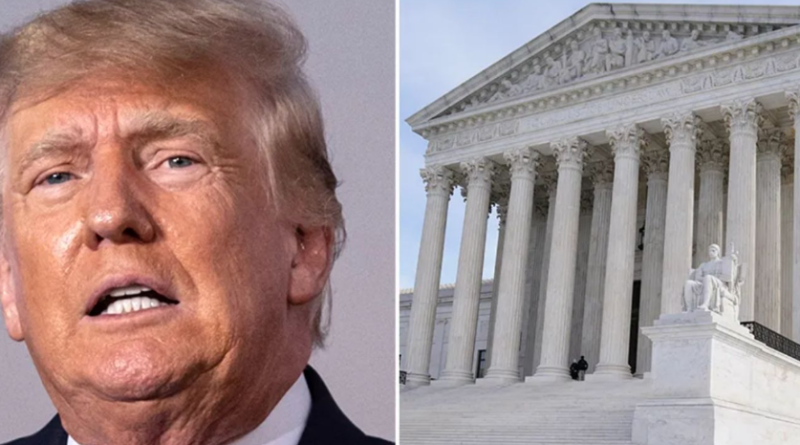
The U.S. Supreme Court announced it will hear arguments on April 1 in a case challenging birthright citizenship, the constitutional principle that grants U.S. citizenship to nearly all children born on American soil.
The case centers on a statutory and constitutional question over whether the 14th Amendment’s Citizenship Clause applies to children born in the United States to parents who are not legal permanent residents. The plaintiffs argue that the original meaning of the clause does not extend automatic citizenship to children of parents in the country illegally.
The justices agreed to take up the appeal after lower courts rejected constitutional challenges brought by a group of petitioners who had sought to limit birthright citizenship. Oral arguments are expected to focus on historical evidence and interpretations of the 14th Amendment’s text and intent of Congress at the time the post-Civil War measure was ratified.
The case, Trump v. Barbara, challenges the legality of an executive order issued by President Donald Trump on January 20, 2025. The order aimed to terminate automatic citizenship for children born in the United States to parents who are in the country without lawful status or who are only temporarily present.
The Supreme Court’s decision to hear the case comes amid ongoing national debate over immigration policy and border security, with supporters of ending birthright citizenship saying it will reduce incentives for illegal immigration and critics warning that any change could leave thousands of U.S.-born citizens in legal limbo.
Observers say the April 1 session will be one of the most closely-watched cases of the term, with potential implications for millions of people and longstanding U.S. immigration law.
Advertisement
A ruling in the case could reshape federal immigration policy and raise questions about citizenship status for children born in the country to parents without lawful status. The Supreme Court is not expected to issue a decision before late June.
The nation’s highest court announced in December it would hear the case. The justices agreed to take up the issue after a string of lower court rulings blocked the Trump administration from enforcing the order.
Trump issued the directive on his first day back in office in January, calling it a necessary correction to what he described as a “century-long misreading” of the 14th Amendment. The order argued that the Constitution’s Citizenship Clause has been “grossly distorted by activist judges and bureaucrats” to grant citizenship to so-called “anchor babies” born to parents without lawful status.
“It is the policy of the United States that no department or agency of the government shall issue or recognize documents purporting to confer U.S. citizenship to a person whose mother was unlawfully present in the United States and whose father was not a U.S. citizen or lawful permanent resident at the time of that person’s birth,” the order states.
Trump’s Justice Department maintains that the phrase “subject to the jurisdiction thereof” in the 14th Amendment excludes children of foreign nationals who owe allegiance to another government or who are in the U.S. illegally.
“The Fourteenth Amendment has never been interpreted to extend citizenship universally to everyone born within the United States,” the order said. “It has always excluded from birthright citizenship persons who were born in the United States but not subject to the jurisdiction thereof.”
The administration’s stance directly challenges the 1898 Supreme Court ruling in United States v. Wong Kim Ark, which held that a child born in the United States to foreign parents legally residing in the country was a citizen at birth. That case has long been cited as the definitive interpretation of the Citizenship Clause, though Trump’s legal team argues the precedent does not apply to those in the country unlawfully.