WASHINGTON — A partial federal government shutdown went into effect early Saturday. It came hours after the Senate met a last-minute deadline to approve a revised package of government funding bills, but the House is not expected to approve the changes until Monday at the earliest.
The Senate voted Friday to separate out extended funding for the Department of Homeland Security after reaching a deal with the White House to put that off for two weeks to negotiate Democratic demands for restrictions on Immigration and Customs Enforcement, including requiring agents to wear body cameras turned on and to wear no masks.
The vote was 71-29, with only five Republicans voting against: Sens. Rand Paul, Ted Cruz, Mike Lee, Ron Johnson and Rick Scott.
The bill now heads to the House, where Speaker Mike Johnson is expected to bring the package to the floor under suspension of the rules requiring a two-thirds majority for passage.
That would require a strong bipartisan vote with substantial support from both Republicans and Democrats to send the bill to President Donald Trump’s desk for his signature.
That House vote on final passage is expected to occur Monday evening.
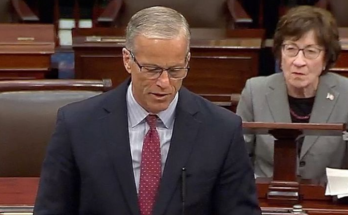
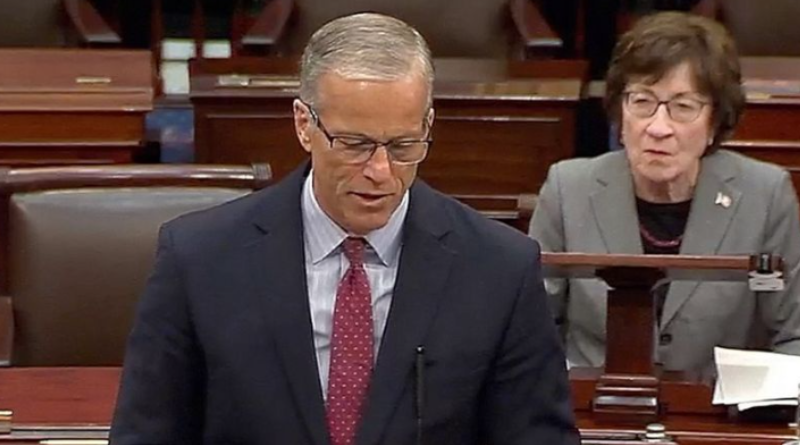
The way for the Senate to vote was cleared earlier Friday when Republican Sen. Lindsey Graham lifted his hold after securing a commitment from Senate Majority Leader John Thune for a vote on banning sanctuary cities in the coming weeks.
Graham earlier Friday had outlined his demands for lifting his hold: a promise of a vote at a later date on his bill to end so-called sanctuary cities that resist the administration’s immigration policies, and a vote related to controversial Arctic Frost provisions, which allow members of Congress to sue the government if federal investigators gain access to their phone records without their knowledge. Those provisions were stripped out of the funding package initially passed by the House.
In a statement Friday afternoon, Graham said Senate Majority Leader John Thune supported his conditions.
“I will lift my hold and vote for the package,” Graham said.
House Minority Leader Hakeem Jeffries, the chamber’s top Democrat, earlier Friday would not say whether he supported the spending agreement reached between Senate Democrats and the White House.
“There’s no agreement that’s been before us,” Jeffries said.
The agreement announced Thursday would see most of the federal government funded through September, while DHS would be funded for two additional weeks at current spending levels to allow lawmakers to negotiate on other provisions in the package.
The funding fight over DHS erupted in the aftermath of the death of Alex Pretti, an ICU nurse, who was killed in a shooting involving federal law enforcement in Minneapolis over the weekend.
With Senate passage in the rear-view mirror, Senate Minority Leader Chuck Schumer laid out the pillars of reform to the Homeland Security bill that Democrats will fight to enact over the next two weeks.
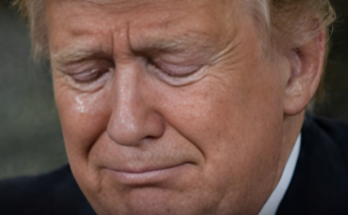
“The bottom line is very simple: the American people are crying out for change,” Schumer said immediately following the Senate vote Friday evening. “This is not America, not America. And when you see those images, know that something is dramatically wrong and it must change. We are fighting to change it. Will our Republican colleagues join us now?”
With only two weeks to negotiate changes, Schumer stressed that Democrats will demand an end to roving patrols, enforce accountability and mandate masks off and body-cameras turned on.
“If our colleagues are not willing to enact real change, real strong change, they should not expect Democratic votes,” Schumer said. “We have only a few days to deliver real progress for the American people, the eyes of the nation are watching.”
Schumer said he intends to huddle with Thune to set the parameters of negotiations not necessarily President Trump.
“We’re going to have a group of Democrats negotiate. We’re going to have to negotiate with the Republicans to get this done,” Schumer said. “But as we’ve said over and over again, they shouldn’t expect our votes if they’re not willing to go along with strong legislation.”
“We need Democrats and Republicans in the Senate to pass this, so I’m going to talk to Thune,” he said.
ABC News’ Lalee Ibssa contributed to this report.