
This article may contain commentary
which reflects the author’s opinion.
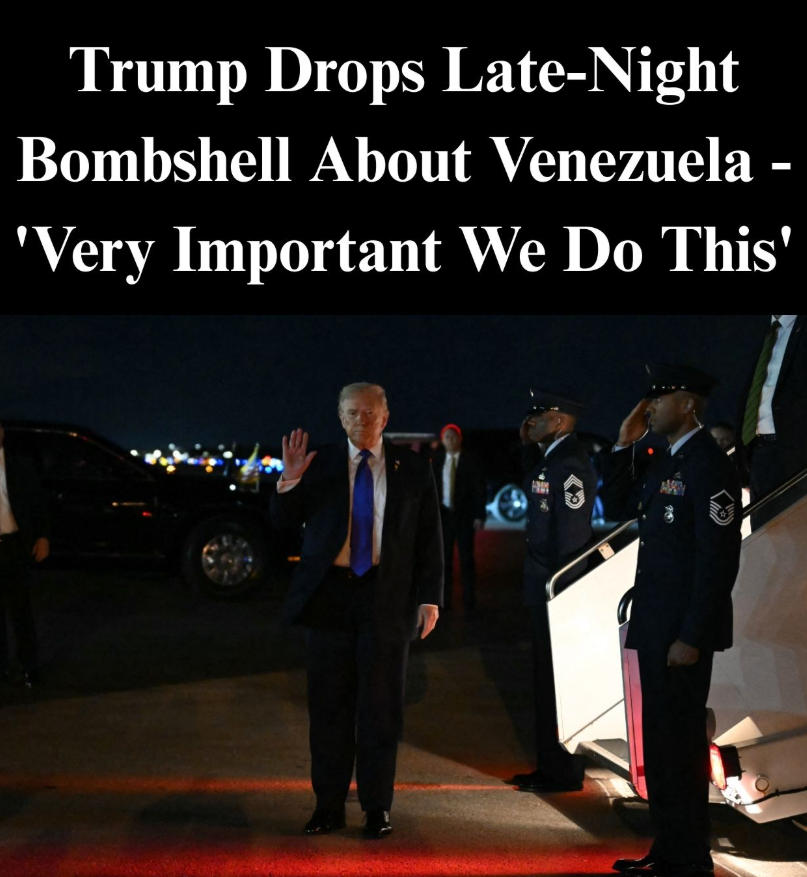
Tensions between the United States and Venezuela appeared to ease in recent days following a period of heightened strain. President Donald Trump posted comments on Truth Social praising what he described as a “smart gesture” by Venezuela.
This is a marked shift in tone less than a week after a U.S.-backed operation captured Venezuelan leader Nicolas Maduro. The operation triggered strong condemnation from Maduro’s government and its allies.
Trump’s remarks suggested a potential cooling of relations, at least temporarily, after days of escalating rhetoric between Washington and Caracas, the Western Journal reported.
“Venezuela is releasing large numbers of political prisoners as a sign of ‘Seeking Peace,’” Trump began. “This is a very important and smart gesture. The U.S.A. and Venezuela are working well together, especially as it pertains to rebuilding, in a much bigger, better, and more modern form, their oil and gas infrastructure.”
The significant gesture has apparently caused Trump to reconsider his earlier suggestion that additional military action might be necessary to further stabilize Maduro’s regime.
“Because of this cooperation, I have cancelled the previously expected second Wave of Attacks, which looks like it will not be needed,” the president posted.
But Trump made it clear that he wasn’t fully discarding the “big stick,” a term used by former President Theodore Roosevelt. “However, all ships will stay in place for safety and security purposes,” Trump said.
Trump emphasized a possible economic benefit for the U.S. stemming from the Maduro raid.
“At least 100 Billion Dollars will be invested by BIG OIL, all of whom I will be meeting with today at The White House,” he posted.
After Maduro’s capture, Trump suggested that Venezuela’s vice president should cooperate or face consequences.
“No, if Maduro’s vice president — if the vice president does what we want, we won’t have to do that,” Trump noted Saturday when reporters asked if he planned a continued U.S. military presence in the country – something that likely would require congressional approval.
“We’re prepared,” Trump said. “You know, we have a second wave that’s much bigger than the first wave.” He said he had already spoken to acting Venezuelan President Delcy Rodriguez “numerous times, and she understands.”
Venezuela has begun releasing political prisoners, which is likely the “important gesture” Trump spoke about. The move could signal the country’s new leadership is responding to pressure from the United States amid broader negotiations over sanctions, oil sales, and detained foreign nationals.
The announcement was made Thursday by Jorge Rodríguez, the head of Venezuela’s National Assembly, who said the government was freeing an “important number” of prisoners as part of what he described as a unilateral effort to “maintain the peace,” NBC News reported.
Rodríguez did not specify how many prisoners would be released, nor did he provide a timeline or list of names.
Human rights groups estimate that Venezuela is holding between 800 and 900 political prisoners, most of whom were detained under former President Nicolás Maduro, who was captured by U.S. forces on Saturday.
Diego Casanova, who works with families of political prisoners, said no official list of those selected for release had been provided.
Despite the lack of formal confirmation, reports and images began emerging throughout the day.
In a video shared by a Venezuelan journalist, opposition politician Enrique Márquez was seen being embraced on a street after his apparent release.
In a statement posted on X, Spanish officials said five Spanish nationals, including one dual citizen, were preparing to travel to Spain.
Spain’s foreign minister, José Manuel Albares, told Spanish broadcaster RNE that the group includes Rocío San Miguel, a Venezuela-Spanish human rights lawyer who was detained in February 2024 at an airport near Caracas.
The other individuals were identified as Andrés Martínez, José María Basoa, Miguel Moreno and Ernesto Gorbe.