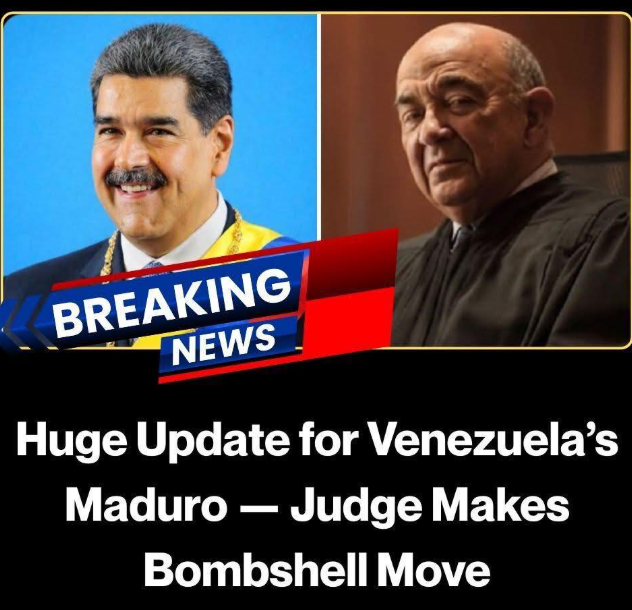
The federal judge presiding over the historic criminal case against former Venezuelan leader Nicolás Maduro is no stranger to high-profile legal battles — or to controversy involving executive power.
U.S. District Judge Alvin K. Hellerstein, a senior jurist in the Southern District of New York, has spent decades handling some of the most complex and politically sensitive cases in the federal court system. Now, at the center of an unprecedented prosecution involving a captured former head of state, his prior record is drawing renewed attention.
A Veteran Judge With Decades on the Bench
Judge Hellerstein was appointed to the federal bench in 1998 and later assumed senior status, allowing him to continue hearing major cases while reducing his caseload. Over the years, he has overseen terrorism litigation, national-security disputes, major financial cases, and constitutional challenges involving executive authority.
His courtroom experience spans Democratic and Republican administrations alike, giving him a reputation as a judge who prioritizes procedure, precedent, and statutory interpretation over political considerations.
That reputation is now central as he presides over charges accusing Maduro and his wife, Cilia Flores, of narcotics trafficking, narco-terrorism conspiracy, and related offenses.
Prior Tensions With the Trump Legal Team
Judge Hellerstein has previously issued rulings that frustrated legal strategies pursued by Donald Trump and his attorneys, particularly in disputes over jurisdiction and presidential authority.
In one of the most notable examples, Hellerstein rejected efforts to move a high-profile state criminal case involving Trump into federal court. He concluded that the conduct at issue did not fall within the scope of official presidential duties, a determination that kept the matter under state jurisdiction.
That decision was later revisited in light of evolving Supreme Court guidance on presidential immunity, but it underscored Hellerstein’s willingness to independently assess claims of executive privilege rather than accept them at face value.
In other rulings during the Trump administration, he emphasized procedural protections and judicial oversight, even when executive agencies argued for expanded authority based on national security or immigration enforcement priorities.
Judicial Independence, Not Ideology
Legal analysts note that Hellerstein’s rulings do not reflect consistent alignment with any political ideology. Instead, they point to a pattern of strict adherence to legal standards, even when doing so places him at odds with powerful government actors.
That independence has earned both praise and criticism over the years. Supporters view him as a stabilizing force in cases where political pressure runs high. Critics argue that his rulings sometimes constrain executive action. Regardless, his approach has remained consistent.
Implications for the Maduro Case
The prosecution of Nicolás Maduro raises unusually complex legal questions, including:
- Whether a former head of state can claim residual sovereign immunity
- How U.S. courts evaluate criminal jurisdiction over foreign leaders
- The legality of capture operations and subsequent prosecution
- Due-process rights in cases involving international military action
Observers expect Judge Hellerstein to scrutinize these issues carefully, particularly motions challenging jurisdiction, evidence admissibility, and the manner in which the defendants were brought to the United States.
Given his history, few expect him to rubber-stamp government arguments — but neither is there indication he will obstruct the case absent legal cause.
A Courtroom With Global Attention
With international scrutiny focused on New York, Judge Hellerstein’s courtroom has become a focal point not just for U.S. law, but for broader questions about accountability, international justice, and the limits of executive power.
His prior clashes with the Trump administration are less about personal conflict and more about a consistent judicial philosophy: the law, not politics, decides the outcome.
As the Maduro case moves forward, that philosophy may prove decisive.