
This article may contain commentary
which reflects the author’s opinion.
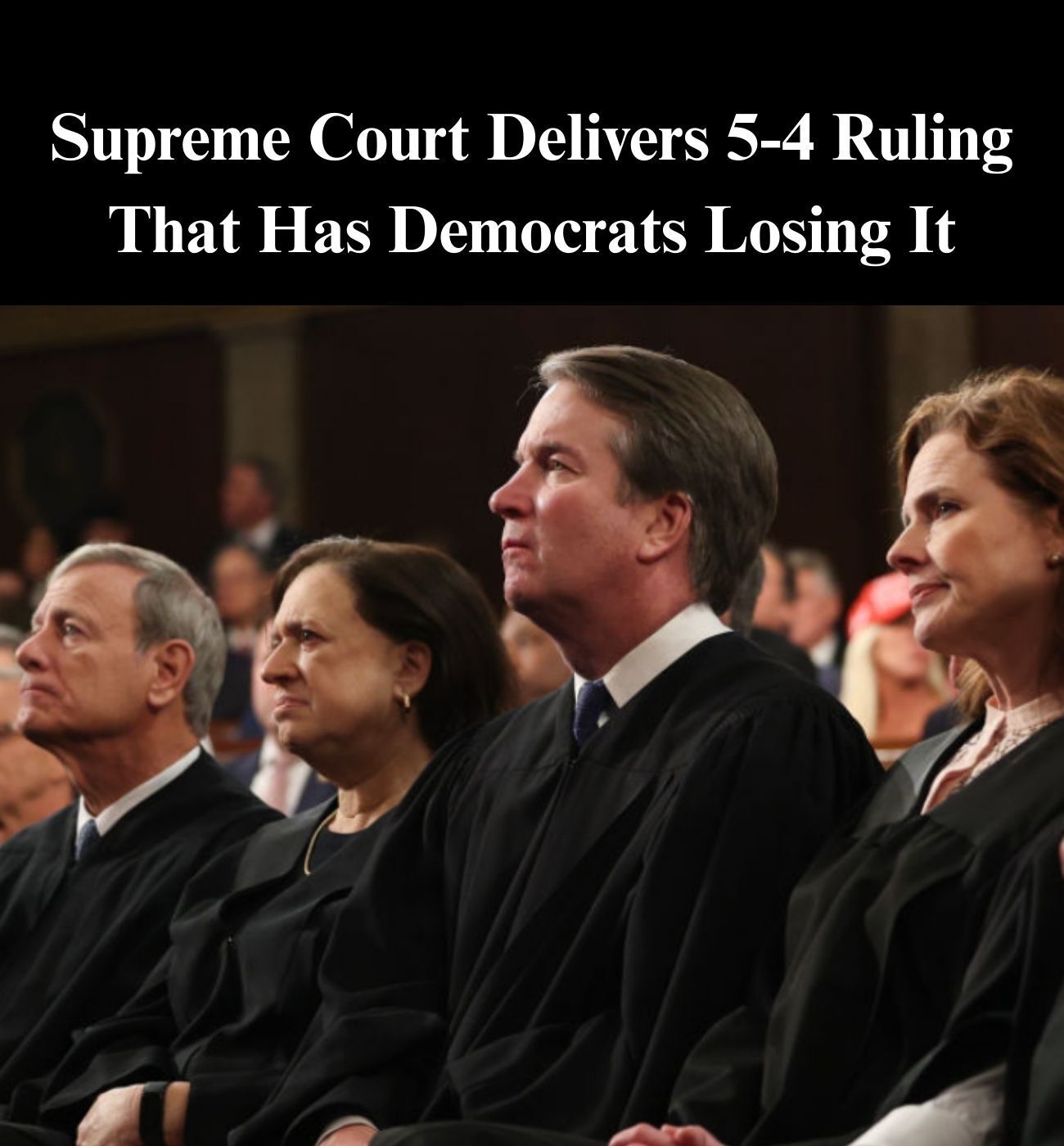
The U.S. Supreme Court delivered a 5-4 ruling to uphold a California animal welfare law passed by state voters, which requires all pork sold in the state to meet certain humane standards. California voters passed the measure in 2018, which strengthened space requirements for egg-laying hens, breeding pigs, and calves raised for veal that were ultimately sold by businesses in the state.
The National Pork Producers Council and the American Farm Bureau Federation attempted to block the law, contending it violates the Constitution because it would effectively require the industry, most of which is located outside of California, to transform.
In a 5-4 decision authored by Justice Neil Gorsuch, the high court rejected the challenge.
“While the Constitution addresses many weighty issues, the type of pork chops California merchants may sell is not on that list,” Gorsuch wrote. “Petitioners would have us cast aside caution for boldness.”
“They have failed — repeatedly — to persuade Congress to use its express Commerce Clause authority to adopt a uniform rule for pork production,” Gorsuch continued. “And they disavow any reliance on this Court’s core dormant Commerce Clause teachings focused on discriminatory state legislation. Instead, petitioners invite us to endorse two new theories of implied judicial power.”
After lower courts sided with the state, the justices agreed to take up the group’s appeal to determine if the law violates a doctrine known as the dormant Commerce Clause, which explains that because the Constitution gives Congress the authority to regulate commerce among the several states, an individual state cannot pass laws that discriminate against other states in commerce.
The pork industry conceded that the law, Proposition 12, did not discriminate against other states.
The nation’s highest court has been busy this week.
Senior advisers to President Donald Trump are telling top Republican donors that two forthcoming Supreme Court rulings could significantly strengthen the GOP heading into the 2026 midterm elections—and potentially reshape the party’s electoral advantages for years to come.
According to people present at a Republican National Committee donor retreat over the weekend, Trump advisers Chris LaCivita and Tony Fabrizio said decisions involving political contribution limits and congressional redistricting have the potential to be “transformational” for Republicans, provided the Court rules in the party’s favor.
The advisers framed the cases as critical to the GOP’s long-term strategy and as developments that could influence both campaign fundraising and the balance of power in future House elections, Axios first reported.
One of the cases is Louisiana v. Callais, while the second is called National Republican Senatorial Committee (NRSC) v. Federal Election Commission (FEC).
In the first case, the Supreme Court is preparing to rule on a major case involving Section 2 of the Voting Rights Act of 1965, the provision that bars states from diluting minority voting power in congressional redistricting.
Section 2 has been the basis for creating “majority-minority” districts, which are designed to give voters in predominantly black or other minority communities the ability to elect candidates of their choice.
Republican officials have long argued that the law amounts to federal overreach and forces the creation of districts that disproportionately benefit Democrats, while unconstitutionally considering race as a primary factor.
Democrats counter that Section 2 is essential to preventing racial discrimination in map-drawing and ensuring that minority voters receive fair representation in Congress, though they don’t address the constitutionality question.
The court’s decision is expected to have significant implications for future redistricting cycles and the partisan balance of the U.S. House.
Court analysts say that, based on the justices’ questioning during October’s oral arguments, a majority of the Supreme Court appeared open to weakening Section 2 of the Voting Rights Act.
Fair Fight Action, a left-wing voting-rights organization, has warned that if the court curtails or overturns the law, Republicans could move to eliminate as many as 19 Democratic-held majority-minority districts before the 2026 midterms — a shift the group says could “effectively cement one-party control of the U.S. House for at least a generation.”
Oral arguments took place on Tuesday regarding the second case, where the justices will determine if a federal law restricting the spending of large party committees in direct coordination with preferred candidates should be abolished.
Republicans contend that the statute infringes on First Amendment protections and limits free political speech.