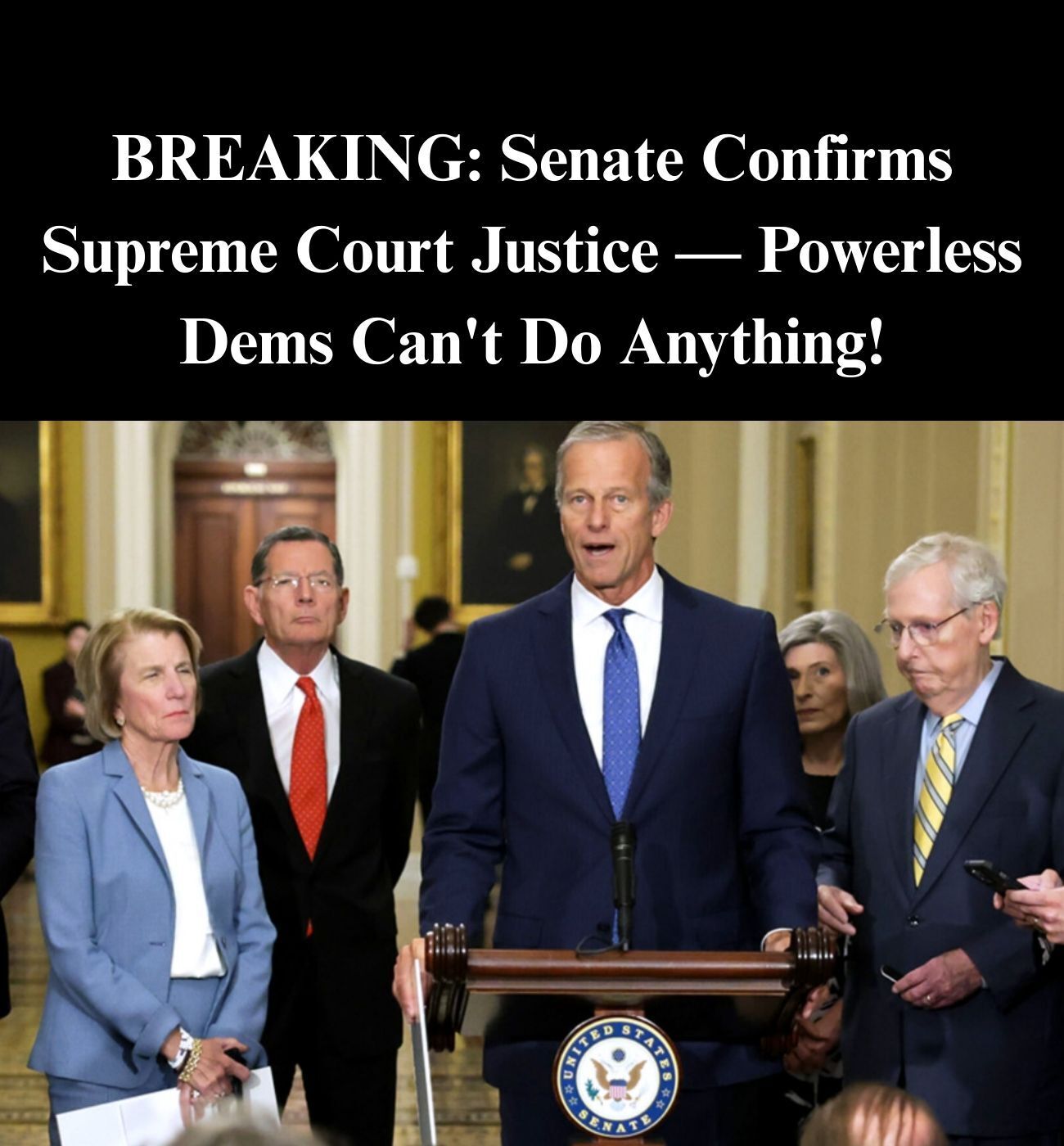

Louisiana Supreme Court Justice William Crain, nominated by President Donald Trump in October, has been confirmed by the U.S. Senate for a federal judgeship on the Eastern District Court in New Orleans.
Crain was approved in a 49–46 vote on Dec. 9, with Republican Sens. John Kennedy — who recommended Crain to the White House — and Bill Cassidy voting in favor. Three senators did not vote.
Another Trump nominee, former U.S. Attorney Alexander C. Van Hook, is still awaiting Senate action for a seat on the federal bench covering Louisiana’s Western District, which includes Shreveport, Alexandria, Lafayette, and Monroe.
Van Hook is a graduate of Centenary College and LSU’s law school and has spent much of his legal career practicing in Shreveport, USA Today reported.
“I have total confidence that Alexander will continue to serve his state and our country with great distinction in this new role,” Trump said after nominating Van Hook in October.
Both Crain and Van Hook cleared the U.S. Senate Judiciary Committee on which Kennedy sits in November.
“Former acting U.S. Attorney Alexander Van Hook and Louisiana Supreme Court Justice William Crain are both intelligent and experienced lawyers, and I have every confidence that President Trump made the right choice in nominating them to be district judges in Louisiana,” Kennedy said.
Crain, 64, is a graduate of LSU Law School who was first elected to the Louisiana Supreme Court in 2019. He had previously served as a judge on the First Circuit Court of Appeal and was a state district court judge before that.
Meanwhile, Senate Republicans pushed through the first procedural hurdle Wednesday as they moved to confirm nearly 100 of President Trump’s nominees. The vote sets up a later decision on 97 of Trump’s picks and marks the third time Republicans have advanced a large bloc of nominees since changing Senate confirmation rules in September.
The final confirmation vote on this group is expected next week, Fox News reported.
If Republicans complete the process, they will have confirmed more than 400 of Trump’s nominees during the first year of his second term.
That total would place Trump well ahead of former President Joe Biden, who had 350 nominees confirmed at the same point in his presidency.
The nominees include former Rep. Anthony D’Esposito of New York for inspector general at the Department of Labor and two selections for the National Labor Relations Board, James Murphy and Scott Mayer, as well as others across nearly every federal agency.
Murphy and Mayer were included in the package after Trump fired National Labor Relations Board member Gwynne Wilcox, a move the Supreme Court upheld earlier this year.
This is Republicans’ second effort to advance the package after Sen. Michael Bennet of Colorado objected last week in an attempt to delay the process.
Senate Republicans changed the confirmation rules to break through Democrats’ months-long blockade of Trump’s nominees, limiting the new process to sub Cabinet level positions that can be approved with a simple majority.
One nominee in the original package, Sara Carter, a former Fox News contributor legally named Sara Bailey, was designated a “Level 1” nominee, meaning she would hold a Cabinet level post.
Trump selected Carter in March to be his drug czar as director of the Office of National Drug Control Policy.
Her inclusion meant Republicans would have needed to overcome a 60 vote threshold to advance the entire slate of 88 nominees.
That was unlikely given Democrats’ near unanimity in opposing several of Trump’s picks and their claims that some were not qualified to serve.
Republicans instead chose to assemble a new and larger package, adding nine more nominees to move forward under the revised rules.