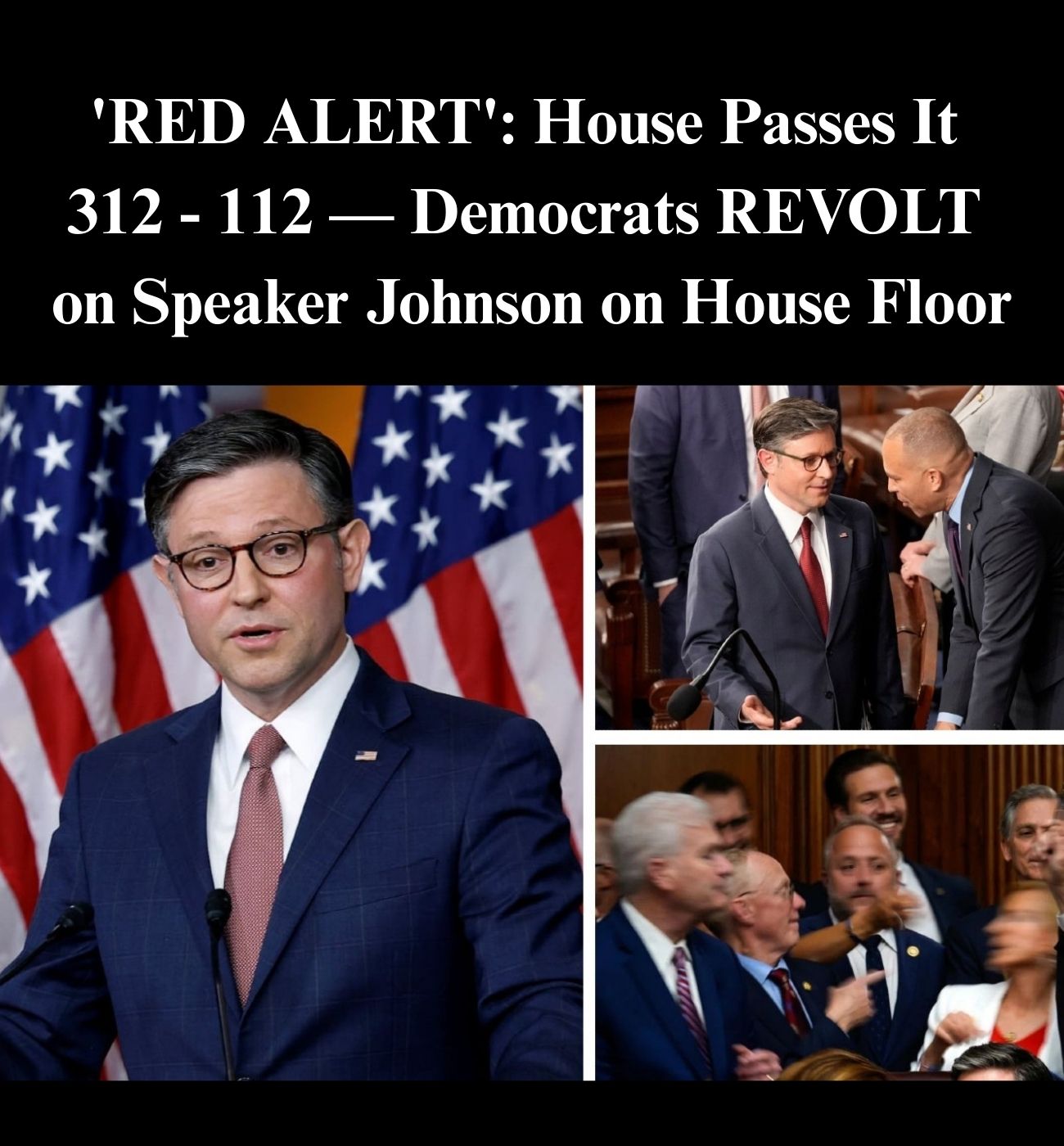

The House passed the National Defense Authorization Act on Wednesday, sending the yearly Pentagon spending bill to the Senate. The vote was 312 to 112, with 18 Republicans and 94 Democrats voting “no” on the measure that authorizes $901 billion in War Department spending.
An earlier procedural vote barely passed 215 to 211 at the last moment after four Republicans, Reps. Anna Paulina Luna of Florida, Marjorie Taylor Greene of Georgia, Tim Burchett of Tennessee, and Lauren Boebert of Colorado, changed their votes from no to yes, Fox News reported.
All Democrats voted no on the procedural rule vote.
House and Senate leaders already merged their own versions of the measure into a negotiated package, meaning it is expected to move smoothly through the Senate to President Donald Trump’s desk.
Hardline conservatives opposed the bill over the inclusion of Ukraine funding at $400 million per year for two years and the omission of a provision that would ban the Federal Reserve from creating a central bank digital currency.
Conservatives advanced the CBDC prohibition as a privacy and civil liberties measure, arguing that a government-issued digital dollar could allow federal agencies to monitor or restrict individual transactions.
Other provisions in the bill restrict Trump from reducing troop levels in Europe and South Korea or from pausing weapons deliveries to Ukraine.
The legislation would also withhold one quarter of War Secretary Pete Hegseth’s travel budget until the Pentagon produces raw footage of the strikes on alleged narco-trafficking boats near Venezuela.
Speaker Mike Johnson highlighted provisions that increase enlisted troop pay by 4 percent, eliminate diversity, equity, and inclusion policies, crack down on antisemitism, eliminate $20 billion in obsolete programs and Pentagon bureaucracy, and implement measures targeting China.
The bill includes a non defense provision championed by conservative privacy advocates, including House Judiciary Committee Chairman Jim Jordan of Ohio, that requires FBI disclosure when the bureau is investigating presidential candidates or other federal candidates.
Coverage of in vitro fertilization for military families, which had become a point of contention in recent days, is not included in the final NDAA.
Nor is there a provision that would preempt states from regulating artificial intelligence.
One major section of the bill creates an outbound investment screening system that requires U.S. companies and investors to notify the Treasury Department when backing certain high-risk technologies in China or in other countries of concern.
The Treasury Department would have the power to block those deals or require annual reporting to Congress.
Another section bans the Pentagon from contracting with Chinese genetic sequencing and biotechnology companies and from buying advanced batteries, photovoltaic components, computer displays, and critical minerals originating from foreign entities of concern, such as China.
The bill directs the State Department to deploy Regional China Officers to U.S. diplomatic posts worldwide to monitor Chinese commercial, technological, and infrastructure activities, including Beijing’s Belt and Road Initiative.
It also requires biennial reports comparing China’s global diplomatic presence with that of the United States.
The bill repeals two inactive war authorizations from 1992 and 2002 relating to earlier phases of U.S. military involvement in Iraq while leaving the 2001 Authorization for Use of Military Force in place.