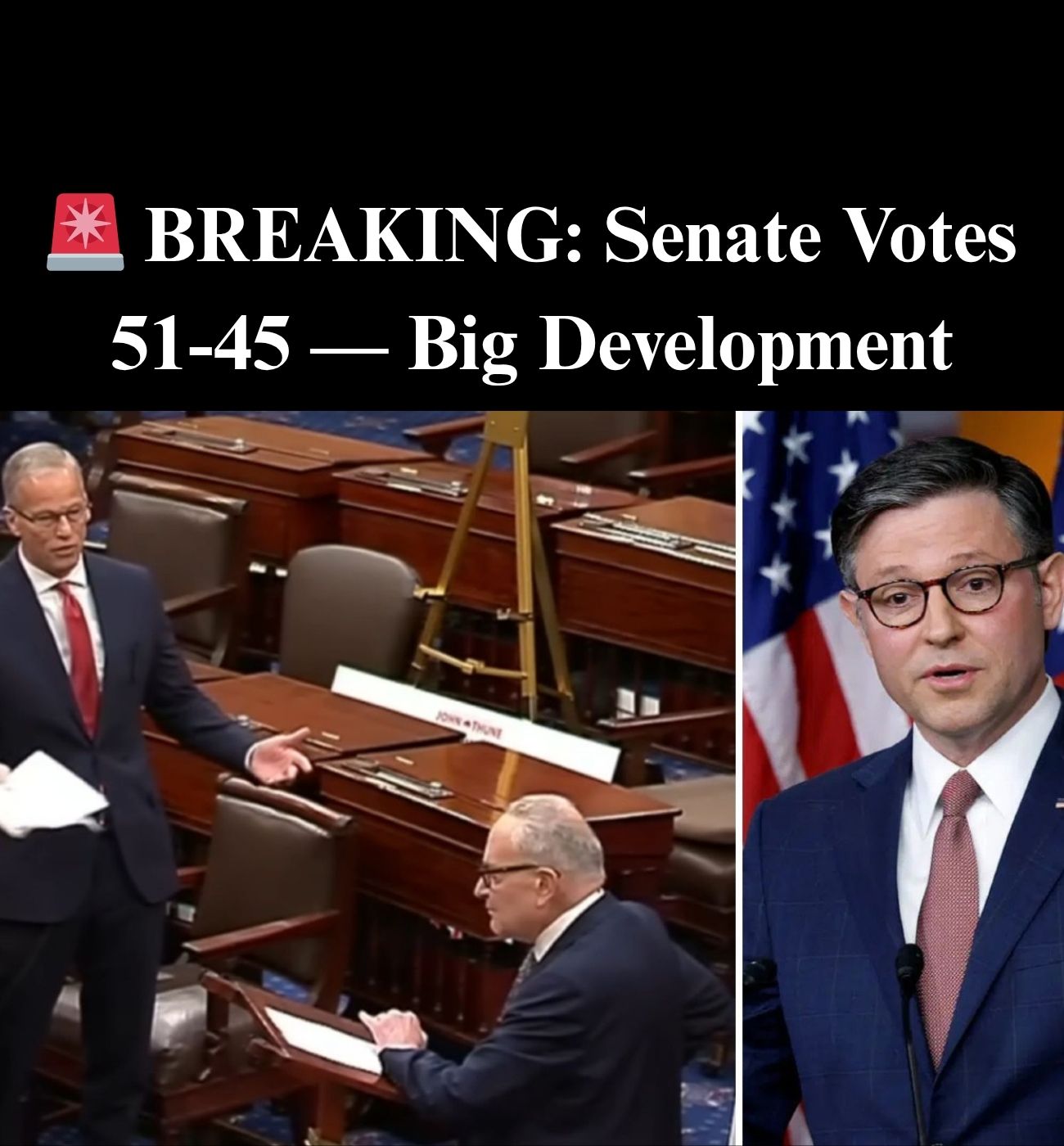
Senate Democrats blocked the clean GOP House-passed short-term funding bill on Thursday for the 10th time since the federal government shut down nearly two weeks ago.
Senate Democrats have ensured that the shutdown will continue into next week because legislators will leave Washington, D.C., for another extended weekend after a final series of votes on Thursday, following only three short days in session.
Neither Republicans nor Democrats are willing to compromise on their firmly established viewpoints, and discussions between the two parties, although primarily informal, have started to diminish.
Senate Majority Leader John Thune, R-S.D., is resolute in his intention to persistently present the House-passed continuing resolution (CR), which would reopen the government until November 21, for repeated votes.
Although several members of the GOP are contemplating a revised expiration date for the continuing resolution, this would necessitate the House, which has been in recess for nearly a month, to reconvene and enact a new resolution.
Despite Thune and the Republicans’ insistence that their strategy is the sole solution to the ongoing shutdown, now in its 16th day, Senate Minority Leader Chuck Schumer, D-N.Y., and the Senate Democratic caucus are still seeking to negotiate a resolution regarding the expiration of Obamacare subsidies, urging President Donald Trump to engage directly in the discussions.
“We’re willing to have, as I said, conversations about all the other issues that they want to talk about,” Thune said.
“But that can’t happen while they are holding the federal government and all these federal employees and our troops and our air traffic controllers and our TSA agents and our border Patrol officials hostage. Open up the government,” Thune added.
“Every day that this goes on, the problems are compounded for federal workers and for ordinary Americans. Chuck Schumer may think that every day gets better for them politically, but I can tell you that is not the experience of the American people,” Thune added.
When asked if he would compromise on the Democrats’ demands as the shutdown dragged on, Schumer dodged and countered that he wouldn’t negotiate in the public eye.
“The bottom line is [Republicans] won’t even negotiate with us,” Schumer said. “So that’s a premature question. But of course, I’m not going to negotiate in public. We need to address the crisis that is afflicted, and that’s the right word, the American people.”
However, Sen. Markwayne Mullin, R-Okla., said that Republicans weren’t working on a subsidy proposal to show Democrats, and he noted that talks between the parties had stalled.
When asked if it was possible to get an extension of the credits before the Nov. 1 open enrollment date, he said, “I don’t think there’s a way to do that.”
“And I think if you don’t have it done by Christmas, it becomes a political issue,” Mullin said. “But you could maybe push it to January, to February, if you wanted to, but we get bumped up against, you know, everybody’s primaries, from the Democrat primaries and Republican primaries, and it becomes a political issue, because, unfortunately, healthcare is political.”
Republicans are attempting to revive the appropriations process in the Senate amid the ongoing shutdown.
Thune scheduled a procedural vote on Thursday over the Senate’s defense funding measure, which would allocate funds for military salaries, among other provisions.
The question of whether Democrats will endorse the spending bill, following months of advocating for a bipartisan government funding process, remains unresolved.
Many contended after their private meeting on Wednesday that they were uncertain about the specifics Republicans would present and deemed a vote on it irrelevant.
Similar to the previous ten efforts to forward the House-approved continuing resolution to Trump’s desk, the same trio of Democratic caucus members—Senators John Fetterman (D-Pa.), Catherine Cortez Masto (D-Nev.), and Angus King (I-Maine)—aligned with Senate Republicans in their vote.
Fetterman, who has typically aligned his votes with the GOP, reiterated the sentiments of his colleagues across the aisle, asserting that any external matters unrelated to the government’s reopening could be addressed after restoring operations in Washington.