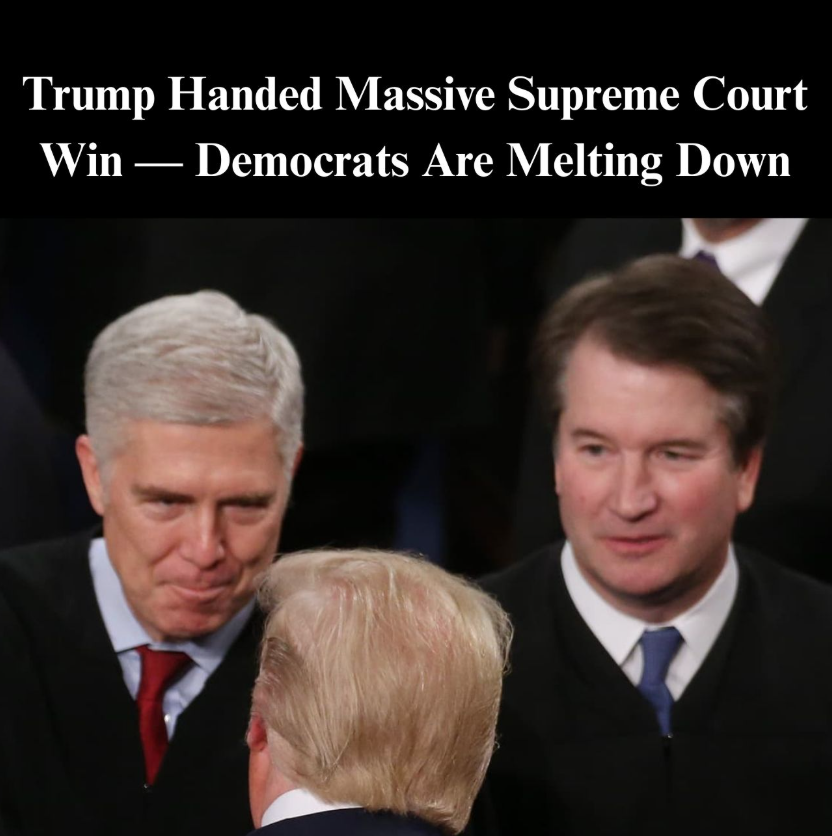
A Supreme Court ruling blocking former President Donald Trump’s use of broad tariff powers under the International Emergency Economic Powers Act (IEEPA) may still leave alternative avenues available to the administration, according to a legal analyst on Wednesday.
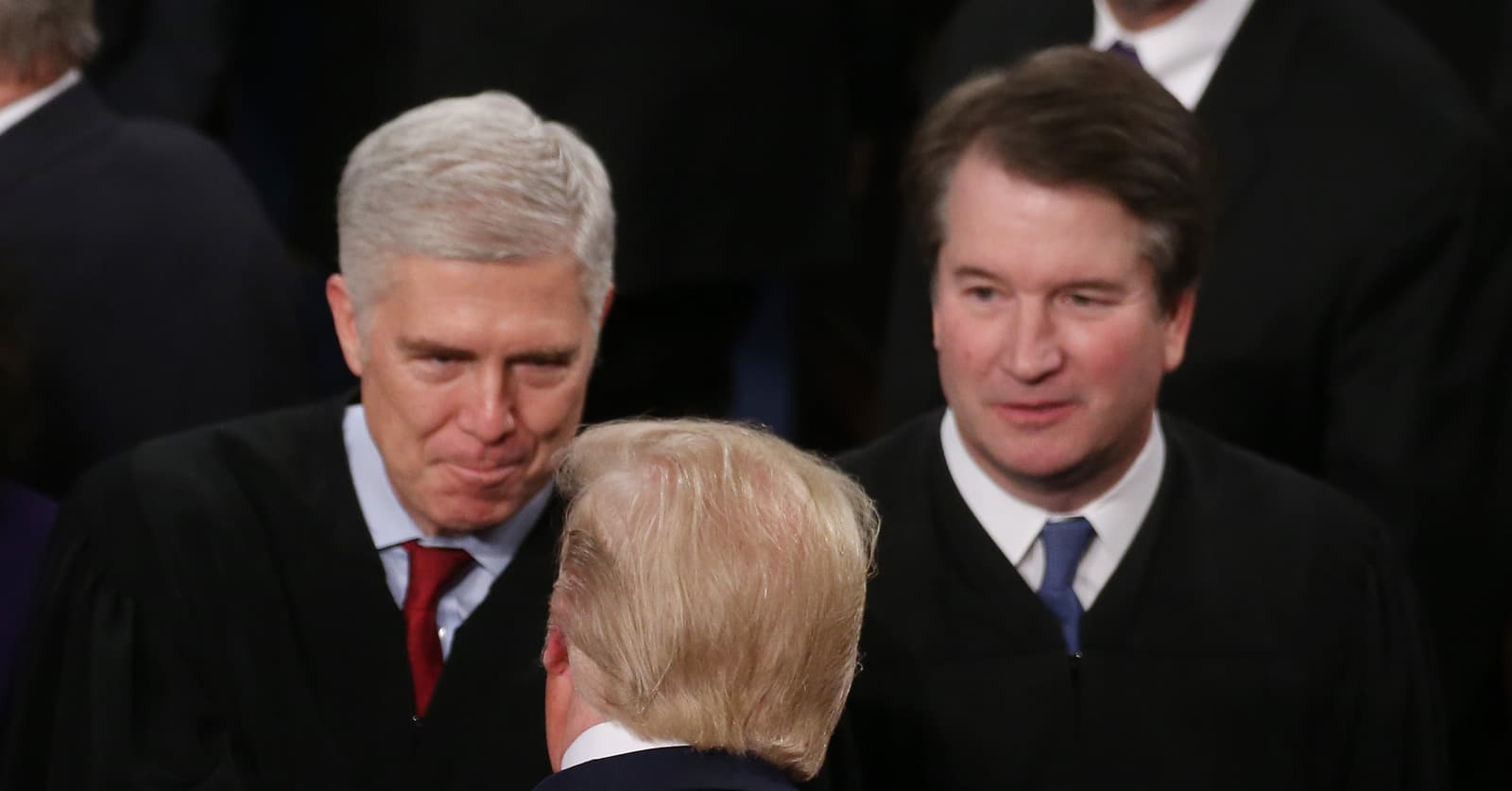
Elliot Williams, a CNN legal analyst and former deputy assistant attorney general in the Obama administration, discussed the decision on The Bulwark’s “Illegal News” podcast. Williams said that although the Court rejected Trump’s use of IEEPA to impose sweeping global tariffs, Justice Brett Kavanaugh’s dissent identified other statutory mechanisms that could allow the president to levy tariffs under more limited circumstances.
“Justice Kavanaugh did sort of lay out a bit of a roadmap for saying that, yes, there are avenues for the president to get some tariffs,” Williams said during the interview.
In his dissent, Kavanaugh expressed support for broader presidential tariff authority under IEEPA but noted that other statutes may provide limited authority. He referenced the Trade Expansion Act of 1962, the Trade Act of 1974 and the Tariff Act of 1930 as potential alternative legal bases for tariffs.
The laws allow a president to impose tariffs, but these tariffs are only temporary, have lower maximum rates than those previously used by Trump, and require him to provide specific findings to justify their implementation. In his dissent, Kavanaugh pointed out that “the president checked the wrong statutory box” when he issued tariffs under the International Emergency Economic Powers Act (IEEPA).
Trump later expressed that he was “proud” of Kavanaugh’s dissent during a briefing about the decision and has moved forward with plans to implement new tariffs using Section 122 of the Trade Act. However, Williams explained that without the IEEPA, Trump’s ability to impose tariffs as quickly and broadly as he had done before is no longer feasible, comparing his situation to winning a luxury car but then being forced to drive an older, beat-up model.
Advertisement
“It is impossible for the president to get the kinds of tariffs, one, that he ran on, and two, that he tried to put in place on ‘Liberation Day,’ whatever it was, in April of [2025],” said Williams.
During his State of the Union address, Trump announced that his administration plans to maintain tariffs by utilizing alternative legal statutes after the Supreme Court rejected part of his tariff program last week. He reiterated his belief that tariff revenue could eventually replace federal income taxes.
Trump said the tariffs “will remain in place until fully approved and tested alternative legal statutes,” adding, “They have been tested for a long time. They’re a little more complex, but they’re actually probably better.”
Legal experts pointed out that the statute the administration is currently using, Section 122, is only a temporary measure. They highlighted that the tariffs can last only 150 days under this authority, and Congress has indicated that they are unlikely to renew the tariffs after that period. Experts noted that unless the president can independently extend the tariffs after 150 days, he will need to pursue another legal option.
Legal experts have pointed out that the statute the administration is currently using, Section 122, serves as a temporary solution. They highlight a significant issue: the tariffs imposed under this authority can only remain in effect for 150 days. Furthermore, Congress has indicated that it is unlikely to renew them after this period. Experts suggest that unless the president can independently extend the tariffs after 150 days, he will need to explore alternative legal options.
U.S. Trade Representative Jamison Greer stated that the administration intends to maintain its current trade strategy by utilizing alternative authorities. “The trade policy we’ve had for the past year is going to remain the same,” Greer said.
“The Supreme Court came down and they said that there’s one element of the president’s tariff program where he couldn’t use that particular legal authority. Congress has given several other legal authorities. And so we’re just going to use those instead,” he added.