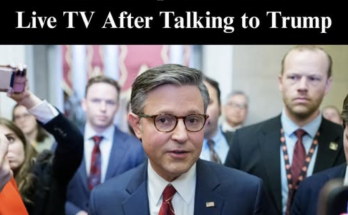

Speaker Mike Johnson (R-La.) said on Monday that passing a war powers resolution would strip President Trump of his authority to continue military operations in Iran, warning that such a move would present a “frightening prospect.”
Representatives Ro Khanna (D-Calif.) and Thomas Massie (R-Ky.) plan to push for a vote on a war powers resolution this week, which would require Congressional authorization before Trump can use military force against Iran again. They argue that the operations in Iran put U.S. troops at risk and are not representative of an “America First” agenda.
According to a source who spoke to The Hill, the resolution is expected to be brought to the floor on Thursday.
“I think the idea that we would move a War Powers Act vote right now, I mean, it will be forced to the floor, but the idea that we would take the ability of our commander in chief, the president, take his authority away right now to finish this job, is a frightening prospect to me,” Johnson told reporters after a briefing on the operation.
“It’s dangerous, and I am certainly hopeful, and I believe we do have the votes to put it down. That’s going to be a good thing for the country and our security and stability,” he added.
The U.S. and Israel conducted joint military strikes against Iran on Saturday after weeks of threats from Trump, who had called for regime change in Tehran. Johnson wrote on the social platform X that Congress’s bipartisan “Gang of Eight” was “briefed in detail earlier this week that military action may become necessary to protect American troops and American citizens in Iran.”
Advertisement
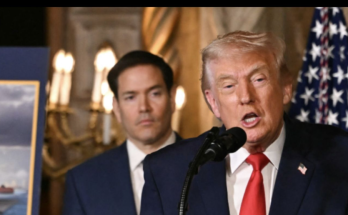
On Monday, Secretary of State Marco Rubio said that the Iranian military and regime were racing to achieve “immunity” for its ongoing nuclear weapons program, meaning the ability to develop enough ballistic missiles to shield itself and the program from destruction. That’s why Trump chose to act now, he added.
.@SecRubio: “This operation needed to happen because Iran, in about a year… they would have so many short-range missiles, so many drones, that no one could do anything about it… look at the damage they’re doing now— and this is a weakened Iran. Imagine a year from now.” https://t.co/JI2PyMK99F pic.twitter.com/EKOdTanPtV
— Rapid Response 47 (@RapidResponse47) March 2, 2026
Trump told CNN on Monday morning that the “big wave” of the operation is yet to come. When he was asked how long the war will last, the president said, “I don’t want to see it go on too long. I always thought it would be four weeks. And we’re a little ahead of schedule.”
On Monday, Johnson told reporters he believes Trump “was acting well within his authority” as commander-in-chief to protect the country.
“It’s not a declaration of war. It’s not something that the president was required, because it’s defensive in nature and in design and in necessity, to come to Congress and get a vote first. And if they had briefed a larger group than the Gang of Eight, you know, there’s a real threat that that very sensitive intelligence that we had, you know, might have been leaked or something,” he said.
“So, this is why the commander in chief of our armed forces has the latitude that any commander in chief, any president always has, because they have a set of information that is sensitive, timely and urgent, and they have to be able to act upon it. They did that.”
House Minority Leader Hakeem Jeffries (D-N.Y.) has urged lawmakers to support the war powers resolution, stating in a CNN interview on Monday that Trump needs to be constrained.
Presidents from both parties have taken action on behalf of the country in the past. Also, every president since the act was passed in the early 1970s has said they believe it unconstitutionally limits a president’s Article II authorities.