
House Democrats largely voted Thursday to allow the Department of Homeland Security shutdown to continue, rejecting renewed Republican pressure to pass a funding bill amid heightened tensions with Iran and domestic security concerns.
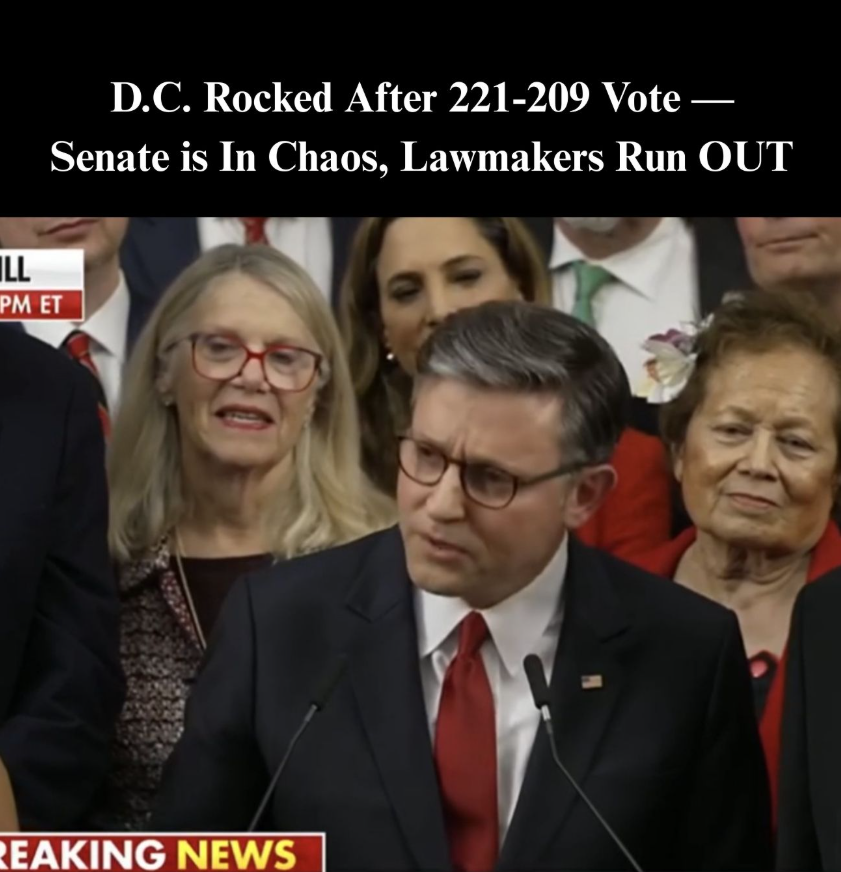
The House approved a bipartisan DHS funding measure in a 221–209 vote, but all but four Democrats opposed it. Reps. Henry Cuellar of Texas, Jared Golden of Maine, Marie Gluesenkamp-Perez of Washington, and Don Davis of North Carolina broke with their party to support the legislation.
The bill would fund DHS through Sept. 30, the end of the fiscal year. It previously passed the House in January following bipartisan negotiations that ended a 43-day government shutdown, the longest in U.S. history. GOP leaders brought the measure back to the floor this week, arguing that the evolving national security situation demanded immediate action.
The vote came just hours after President Donald Trump announced he was removing DHS Secretary Kristi Noem and appointing Sen. Markwayne Mullin as her replacement — a move that shocked Capitol Hill but did not shift Democratic opposition.
House Minority Leader Hakeem Jeffries dismissed the leadership change as irrelevant to the negotiations.
“It’s not like Kristi Noem was the one who was involved in negotiating anything. She was a corrupt lackey. So we were dealing with the White House before, and we’re going to continue to deal with the White House at this point,” Jeffries said.
The funding bill would fully restore DHS operations and includes provisions originally demanded by Democrats, such as requiring body-worn cameras for Immigration and Customs Enforcement officers and mandating additional training on public engagement and de-escalation.
Despite those concessions, Democratic leadership has held firm, demanding further restrictions on ICE and Customs and Border Protection operations following fallout from Trump’s immigration crackdown in Minneapolis, where two U.S. citizens were shot and killed by federal agents during anti-ICE demonstrations. That operation has since concluded.
Advertisement
Republicans argue that maintaining a shutdown at DHS — the agency responsible for border security, counterterrorism coordination, cybersecurity, FEMA, and the Coast Guard — is reckless given rising global instability tied to U.S.-Israeli operations targeting Iranian military and leadership assets.
Speaker Mike Johnson said the shutdown creates unnecessary vulnerability.
“Now is the time to be vigilant at home and to ensure that all of our doors are locked, so to speak,” Johnson said. “And yet, as all this is happening, we have Democrats running around here playing political games in Congress. It’s infuriating. They’ve shut down the very agency that is responsible for securing the homeland.”
Jeffries countered that Republicans are using foreign conflict as leverage.
“Donald Trump launches an unauthorized war in the Middle East,” Jeffries said earlier this week. “He decides that he wants to spend billions of dollars to bomb Iran, rather than spend taxpayer dollars to lower the grocery bills that are crushing the American people, and then wants to use his unauthorized war as an excuse to continue spending taxpayer dollars to brutalize or kill American citizens by continuing to unleash ICE without restriction on the American people? I think it’s ridiculous.”
The real leverage, however, lies in the Senate. Later Thursday, Senate Democrats blocked the same DHS funding bill, voting 51–45 in favor — short of the 60 votes needed to overcome a filibuster. Every Democrat except Sen. John Fetterman of Pennsylvania voted against the measure.
Senate Majority Leader John Thune indicated negotiations between the White House and Senate Minority Leader Chuck Schumer remain stalled.
“It’s never enough, and I think the reason it’s never enough is because they just really don’t want a deal,” Thune said. “I think they see this as politically advantageous to them.”
The shutdown now stretches into a fourth week, with little sign of a breakthrough. Democrats continue to push for tighter warrant standards, unmasking requirements for ICE and CBP agents, and additional operational constraints.
Meanwhile, Republicans warn that prolonged dysfunction at DHS could leave the nation exposed at a time of elevated threat levels.
“At some point, something bad is going to happen,” Thune said.