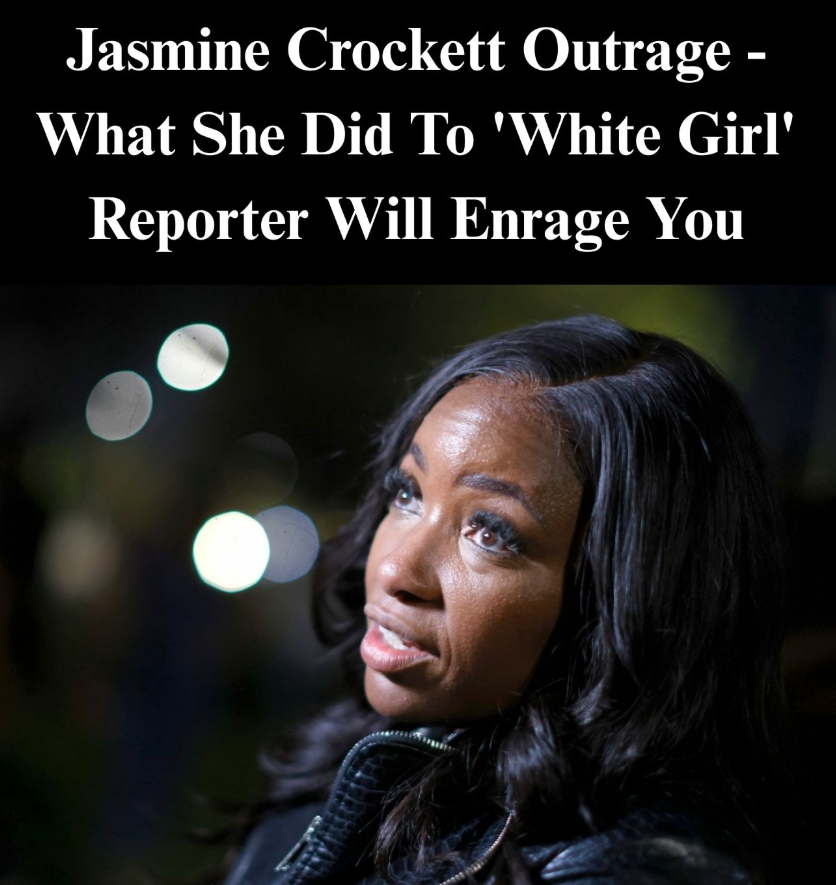

Rep. Jasmine Crockett (D-TX) is facing criticism after The Atlantic staff writer Elaine Godfrey reported that she was removed from a Crockett Senate campaign rally in Lubbock by armed security guards Godfrey wrote Thursday that she was “thrown out” of the event after being identified by members of Crockett’s team and labeled a “top-notch hater.”
“Right before armed guards escorted me from the rally and left me on the edge of a Texas-county road, I was informed that I was no longer welcome at an event that I had already attended,” Godfrey wrote.
According to her account, she had spent approximately an hour at the rally, reporting from the press area and interviewing attendees, before being approached by a woman wearing a badge.
“‘Are you Elaine?’ she asked. I recognized her from the entrance of the event, where I had identified myself as she’d waved me into the building’s press area. Yes, I answered. ‘Her team has asked you to leave,’ she said. When I asked why, the staffer looked at her phone and read dutifully: ‘They just said, “Elaine from Atlantic, White girl with a hat and notepad. She’s interviewing people in the crowd. She’s a top-notch hater and will spin. She needs to leave,”‘ Godfrey wrote.
Godfrey’s account prompted swift reaction online, with critics questioning Crockett’s handling of media access as she seeks higher office.
Following publication of the article, Crockett disputed the allegation that the reporter had been removed from the event. Speaking on Wednesday with CBS journalist Shawna Mizelle, Crockett said there was “no evidence” that the Atlantic reporter was kicked out of the rally. She characterized the controversy as “silly season” and suggested that there was a “specific journalist” present who has a “history of being less than truthful” and had previously lost a lawsuit against her.
Godfrey responded to that claim in her article, writing: “Perhaps she was thinking of someone else, because that’s not something that has ever happened to me.”
The exchange added to tensions between Crockett and the reporter, who previously authored a July profile of the Texas congresswoman. Godfrey wrote at the time that Crockett reacted negatively to the inclusion of comments from fellow House Democrats in the piece.
Advertisement
“She was, she told me, ‘shutting down the profile and revoking all permissions,’” Godfrey wrote in reference to Crockett’s response during the reporting process.
Despite the objection, the profile was ultimately published and included remarks from other Democratic lawmakers.
The latest episode has drawn commentary from journalists and political observers across the ideological spectrum.
Former CNN journalist Chris Cillizza wrote on X, “This is so bad by @JasmineForUS. Not ready for primetime sort of stuff.”
Journalist Zaid Jilani questioned the political implications of the incident, writing that he did not understand “how in the world” Crockett expects to “win over enough Texans” if she “can’t get along with Atlantic magazine reporters,” noting that many of them “vote Democrat.”
A pro-Democrat Mormon account on X argued that if Crockett “cannot handle questions from The Atlantic, and can’t do it without her staff calling the reporter a ‘white girl….top notch hater’ she will never survive the election.”
Another user described the episode as “Amateur night in Texas from the entire Crockett team.”
Former Bulwark editor-in-chief Charlie Sykes wrote, “Apparently, Jasmine Crockett has a problem with critical media.”
Crockett, who has drawn national attention in recent years for her sharp exchanges with political opponents, is running for U.S. Senate in Texas. The Lubbock rally was part of her campaign outreach efforts in the state.
As of Thursday, Crockett’s office had not issued a detailed public statement addressing Godfrey’s account beyond her comments disputing that the reporter had been removed. No video of the removal has been publicly released, and no additional campaign staff have provided on-the-record explanations of the decision.
The incident underscores the scrutiny candidates face in statewide races, particularly when disputes with members of the press become public. With the Texas Senate contest expected to draw significant attention, questions surrounding media access and campaign conduct are likely to remain part of the broader political conversation.