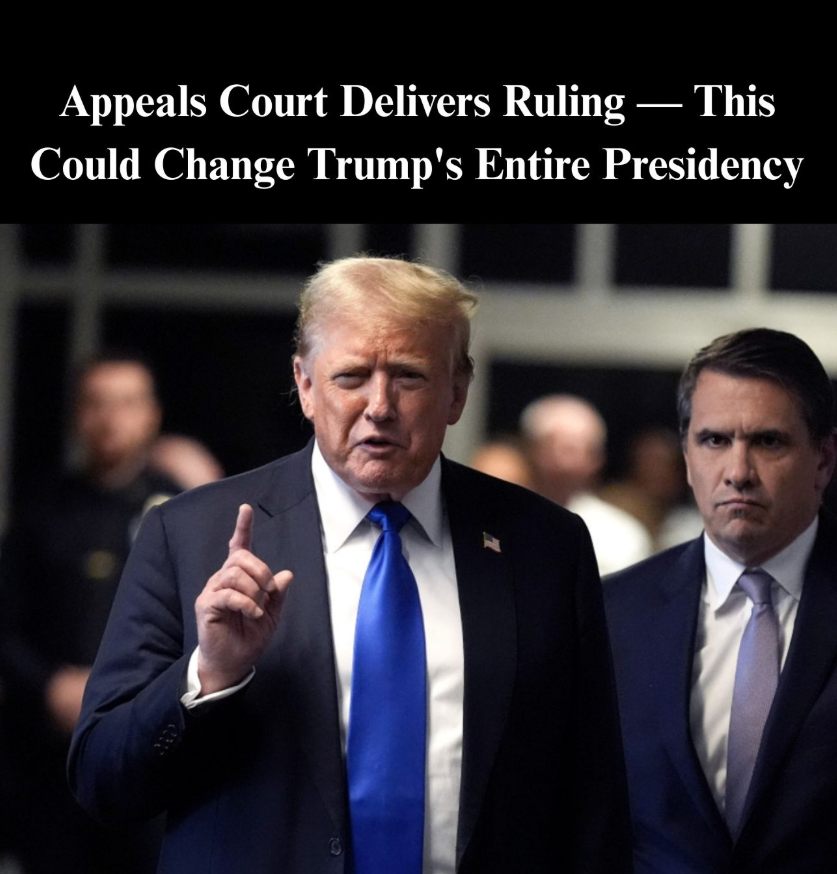

A U.S. appeals court rejected a request from unions to prevent President Donald Trump’s administration from removing the ability of hundreds of thousands of federal employees to engage in union negotiations with U.S. agencies. This decision reversed a ruling made by a lower court.
A three-judge panel of the 9th U.S. Circuit Court of Appeals in San Francisco stated that Trump’s 2025 order, which eliminates collective bargaining rights for many government workers, is valid and grounded in national security concerns, Reuters reported this week.
The unions contended that Trump issued the order as retaliation for their challenges to various administration policies, which they claimed violated their free-speech rights. However, the 9th Circuit court stated that Trump would have taken the same action regardless of whether he intended to punish the unions.
Trump’s order “expresses that the President’s primary – if not only – concern with union activity was its interference with national security,” Circuit Judge Daniel Bress, a Trump appointee, wrote for the court.
Eliminating collective bargaining would enable agencies to more easily alter working conditions, as well as fire or discipline employees. Additionally, it could prevent unions from legally challenging initiatives from the Trump administration.
The panel overturned a ruling made last year by U.S. District Judge James Donato in San Francisco, which had temporarily blocked Trump’s order. The 9th Circuit Court had paused Donato’s ruling in August while awaiting the outcome of the appeal. Similarly, a federal appeals court in Washington, D.C., had paused a related ruling in May that also blocked Trump’s order.
White House spokeswoman Taylor Rogers, in a statement, called the decision “a great legal victory for President Trump and his ability to properly manage the federal government.”
“President Trump’s executive actions safeguard American interests and ensure that agencies vital to our national security can execute their missions without delay,” Rogers said, per Reuters.
Advertisement
Everett Kelley, president of the 800,000-member American Federation of Government Employees, said the decision is not a final ruling on the legality of Trump’s conduct and that the union may seek review from the full 9th Circuit.
“We are confident that when the full record is developed, we will prevail,” Kelley said in a statement.
Trump’s order exempted over a dozen federal agencies from their obligations to negotiate with unions. These agencies include the Departments of Justice, State, Defense, Treasury, and Health and Human Services.
The executive order stated that agencies involved primarily in intelligence, counterintelligence, investigative, or national security work are exempt from collective bargaining requirements. This significantly broadens an existing exception for workers whose duties relate to national security.
Meanwhile, a Supreme Court ruling blocking Trump’s use of broad tariff powers under the International Emergency Economic Powers Act (IEEPA) may still leave alternative avenues available to the administration, according to a legal analyst on Wednesday.
Elliot Williams, a CNN legal analyst and former deputy assistant attorney general in the Obama administration, discussed the decision on The Bulwark’s “Illegal News” podcast. Williams said that although the Court rejected Trump’s use of IEEPA to impose sweeping global tariffs, Justice Brett Kavanaugh’s dissent identified other statutory mechanisms that could allow the president to levy tariffs under more limited circumstances.
“Justice Kavanaugh did sort of lay out a bit of a roadmap for saying that, yes, there are avenues for the president to get some tariffs,” Williams said during the interview.
In his dissent, Kavanaugh expressed support for broader presidential tariff authority under IEEPA but noted that other statutes may provide limited authority. He referenced the Trade Expansion Act of 1962, the Trade Act of 1974 and the Tariff Act of 1930 as potential alternative legal bases for tariffs.
The laws allow a president to impose tariffs, but these tariffs are only temporary, have lower maximum rates than those previously used by Trump, and require him to provide specific findings to justify their implementation.
In his dissent, Kavanaugh pointed out that “the president checked the wrong statutory box” when he issued tariffs under the International Emergency Economic Powers Act (IEEPA).