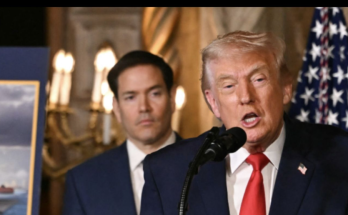

Vice President JD Vance offered incredible insight on Monday night into when President Donald Trump ultimately decided to give the greenlight on striking Iran.
In an interview with “Jesse Watters Primetime,” Vance disclosed that U.S. officials deemed Tehran’s nuclear program claims unsatisfactory, leading to the collapse of talks with Iran. This led Trump to approve “Operation Epic Fury.”
Vance said that U.S. diplomats, such as Secretary of State Marco Rubio, Steve Witkoff, and Jared Kushner, had “deliberate” talks with the Iranian delegation in Geneva.
He said that the talks were meant to stop Tehran’s nuclear program in exchange for lifting sanctions and stopping a larger war, but they ultimately failed.
“But the Iranians would come back to us and they’d say, ‘Well, you know, having enrichment for civilian purposes, for energy purposes, is a matter of national pride,’” Vance said.
“And so we would say, ‘OK, that’s interesting, but why are you building your enrichment facilities 70 feet underground? And why are you enriching to a level that’s way beyond civilian enrichment and is only useful if your goal is to build a nuclear bomb?’” he said.
Vance added that “nobody objects to the Iranians being able to build medical isotopes; the objection is these enrichment facilities that are only useful for building a nuclear weapon.”
“It just doesn’t pass the smell test for you to say that you want enrichment for medical isotopes, while at the same time trying to build a facility 70 to 80 feet underground,” he explained.
This comes after the Trump administration said in June that precision strikes at the time “obliterated” Iran’s nuclear enrichment facilities.
Advertisement
“Based on everything we have seen — and I’ve seen it all — our bombing campaign obliterated Iran’s ability to create nuclear weapons,” Pentagon chief Pete Hegseth said at the time. “Our massive bombs hit exactly the right spot at each target and worked perfectly. The impact of those bombs is buried under a mountain of rubble in Iran; so anyone who says the bombs were not devastating is just trying to undermine the president and the successful mission.”
WATCH:
President Trump will not get the United States into a years-long conflict with no clear objective.
Iran can never be allowed to obtain a nuclear weapon. That is the goal of this operation and President Trump will see it through to completion. pic.twitter.com/Spi2Mcke6F
— JD Vance (@JDVance) March 3, 2026
U.S. Central Command said on Monday that U.S. forces had destroyed command and control centers for the Islamic Revolutionary Guard Corps, Iranian air defense systems, and missile and drone launch sites as part of the ongoing conflict in the Middle East between the two sides.
In a post on X, CENTCOM wrote: “U.S. forces have destroyed Islamic Revolutionary Guard Corps command and control facilities, Iranian air defense capabilities, missile and drone launch sites, and military airfields during sustained operations.”
“We will continue to take decisive action against imminent threats posed by the Iranian regime,” the post continued.
CENTCOM also said Monday that American forces are striking Iran “surgically, overwhelmingly, and unapologetically” as part of Operation Epic Fury, releasing video that it said shows Iranian offensive missile equipment being destroyed.
“As the Secretary of War stated this morning, U.S. forces are hitting Iran surgically, overwhelmingly, and unapologetically,” CENTCOM said in a post on X. “Operation Epic Fury is laser-focused on destroying Iranian offensive missiles.”
On Monday, the White House officially notified Congress that President Trump ordered precise military strikes against Iran on February 28.
He said that threats to U.S. forces, regional allies, and international shipping were enough to justify this action under his constitutional authority as commander in chief.
“I write to apprise you of military action taken on February 28, 2026, against the Government of the Islamic Republic of Iran,” the president wrote in the letter to Senate President pro tempore Charles Grassley, invoking the War Powers Resolution.
Trump said the strikes targeted “numerous targets within Iran including ballistic missile sites, maritime mining capabilities, air defenses, and command and control capabilities,” adding that the action was taken to “protect United States forces in the region, protect the United States homeland” and ensure “the free flow of maritime commerce through the Strait of Hormuz” in collective self-defense of regional allies, including Israel.