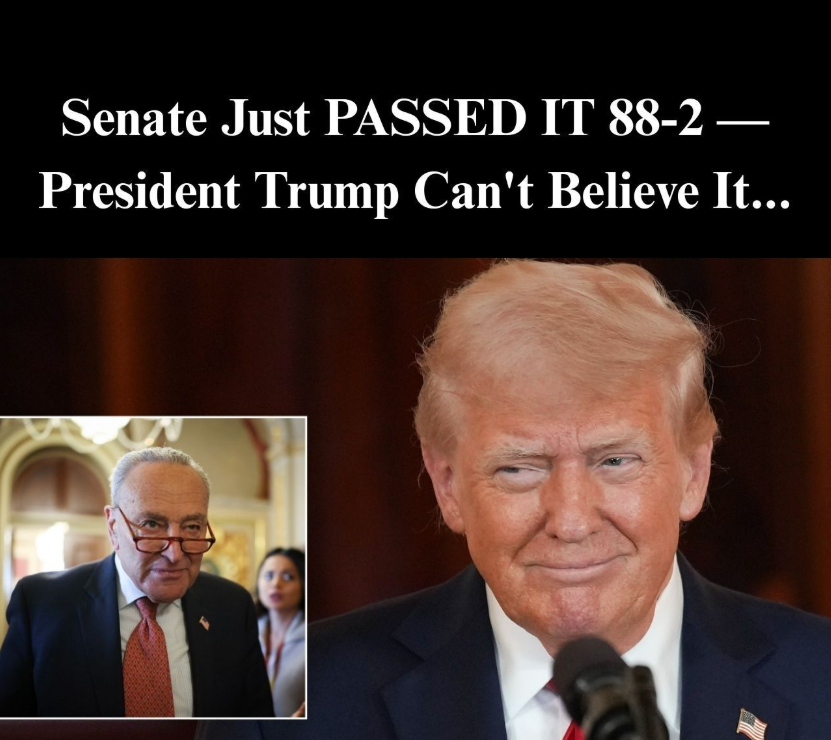

The U.S. Senate voted overwhelmingly to pass a key piece of legislation aimed at bolstering the country’s nuclear energy sector. The nuclear package was combined with another bill that reauthorized the U.S. Fire Administration and grant programs for firefighters.
The measure aims to accelerate the approval process for new nuclear plants as many of the country’s existing plants reach the end of their serviceable lives. Additionally, it reduces the licensing fees that power companies must pay to initiate projects. It also mandates the Nuclear Regulatory Commission to prepare a report examining ways to simplify and expedite the environmental review process.
The bill passed by a vote of 88-2, with Sens. Ed Markey (D-Mass.) and Bernie Sanders (I-Vt.) opposing the measure.
The Trump administration has placed an extreme focus on “unleashing American energy.”
A separate federal bill that could lower the cost of new homes by repealing energy efficiency programs is headed to the U.S. Senate.
The House bill, which is led by Fort Worth Republican Congressman Craig Goldman, gets rid of energy rules for home appliances that were put in place by the Biden administration.
He said that the Biden administration’s expensive rules have made homes more expensive, making it feel like owning one is out of reach for many. This law could let house prices drop by as much as $31,000.
Goldman made it a priority to undo Biden-era rules on the House Energy and Commerce Committee during his first year. He is now in his second year on Capitol Hill, and his main goals are to make things more affordable and lower the cost of health care.
“Affordability is way more than just a buzzword,” Goldman said. “How do we decrease housing costs? How do we decrease oil and gas prices, like I mentioned? How do we decrease healthcare costs? You know, big issues that affect people in my district.”
Advertisement
The Homeowner Energy Freedom Act would make it easier to put gas stoves and water heaters in new homes.
If this bill passes the Senate and is signed by the president, the Department of Energy will no longer have programs that reward low- and middle-income homes for using certain very efficient electricity projects.
It would also end grants for training contractors in home energy efficiency and help state and local governments to adopt building energy codes. Representatives from both parties are sponsoring the bill. Dan Crenshaw is a House Republican from Texas, and Jake Ellzey is a Republican from Dallas.
Goldman said he’s hopeful the Senate will “swiftly” pass the legislation.
President Trump has also issued four executive orders directing the Nuclear Regulatory Commission to streamline regulations and expedite the issuance of new licenses for nuclear power facilities, to act on applications within 18 months.
The United States was formerly the world leader in nuclear design and construction. Still, delays and exorbitant prices have given China that position, which is building a record number of reactors.
The directives aim to expedite federal permitting for new nuclear projects and technology, as well as implement cost-cutting strategies to reduce the NRC’s footprint.
The sector will benefit from federal subsidies since the House of Representatives’ draft budget legislation retains tax incentives for new and existing nuclear facilities but requires them to begin construction before January 1, 2029.
The plan is to triple domestic nuclear power generation over the next 25 years, boosting capacity from around 100 gigawatts to 400 gigawatts by 2050.
This comes as the U.S. Department of Energy announced on Tuesday that the long-idle nuclear reactor at Pennsylvania’s Three Mile Island, which is contracted to provide power to Microsoft data centers, will be restarted with the help of a $1 billion loan.
The action is in line with Trump’s goals of encouraging the development of artificial intelligence and increasing nuclear energy.