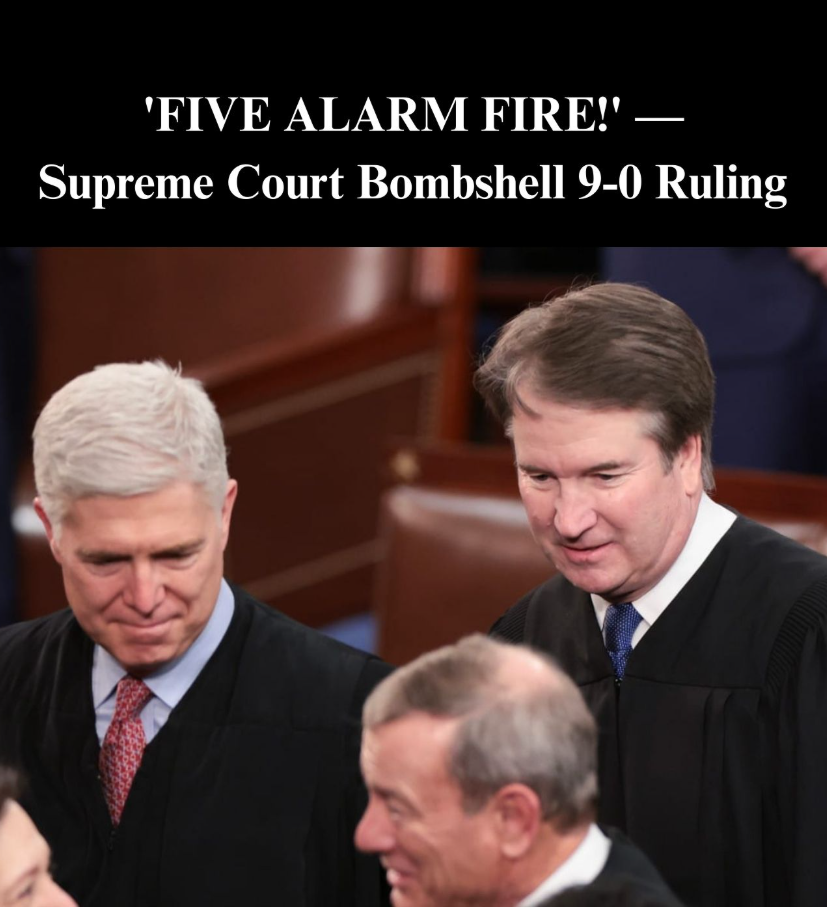

The U.S. Supreme Court unanimously ruled that federal courts must apply a time limit when a party seeks to challenge a judgment as void under federal procedural rules, settling a long-running dispute among lower courts.
In Coney Island Auto Parts Unlimited Inc. v. Burton, the justices affirmed the U.S. Court of Appeals for the Sixth Circuit’s 2024 decision, holding that Federal Rule of Civil Procedure 60(c)(1) requires motions to vacate even allegedly void judgments to be filed within a “reasonable time.”
The case arose after Coney Island Auto Parts, a Brooklyn-area company, sought to overturn a default judgment entered against it in 2015, arguing that it was never properly served. The bankruptcy court and federal district court denied the challenge on timeliness grounds, a ruling the Sixth Circuit upheld.
Justice Samuel Alito, writing for the court, emphasized that the plain text of Rule 60(c)(1) — which states that a motion under Rule 60(b) must be made within a reasonable time — applies to motions asserting that a judgment is void. Under the court’s interpretation, the rule’s structure and language foreclose treating void judgments as exempt from timing requirements.
The decision resolves a split among federal appeals courts, with most circuits holding that no time limit applies to void-judgment challenges because such judgments are legally null from the start, while only a minority of circuits, like the Sixth, requiring prompt action.
Justice Ketanji Brown Jackson noted during oral arguments that determining whether a judgment is truly void can be complex, and the court’s ruling leaves procedural mechanisms in place to balance finality with fairness.
The ruling is expected to influence civil litigation practice nationwide by reinforcing procedural deadlines for reopening final judgments, even when jurisdictional defects are alleged.
The Supreme Court, in a 6-3 decision, struck down the tariffs on Friday, ruling that Trump lacked the statutory authority under the International Emergency Economic Powers Act to implement broad trade penalties without explicit congressional authorization.
The case has drawn significant attention as a legal rebuke of a key element of the administration’s trade policy.
Advertisement
Vice President JD Vance sharply criticized the Supreme Court decision, calling the ruling “lawlessness” in a social media post on Friday.
In a post on X, Vance said the court’s interpretation “decided that Congress, despite giving the president the ability to ‘regulate imports,’ didn’t actually mean it,” and described the ruling as “lawlessness from the Court, plain and simple.”
“And its only effect will be to make it harder for the president to protect American industries and supply chain resiliency.”
He added, “President Trump has a wide range of other tariff powers, and he will use them to defend American workers and advance this administration’s trade priorities.”
The Supreme Court’s ruling marked a setback for the administration’s signature tariff strategy, which had aimed to address trade imbalances and strengthen domestic production.
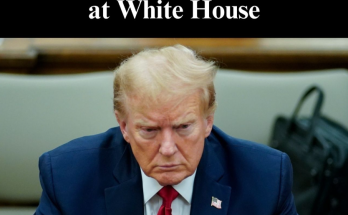
Trump responded to the decision by criticizing the court and signaling plans to pursue alternative legal avenues for trade measures.
The tariffs had targeted goods from a broad range of U.S. trading partners and were central to the White House’s economic agenda. The ruling upheld the constitutional principle that significant tariff authority lies with Congress, according to the court’s majority opinion.
Trump stated that the ruling still provided his administration considerable latitude to increase tariffs using other authorities, referencing a line he credited to Justice Brett Kavanaugh’s dissent.
George Washington University Law School professor and legal scholar Jonathan Turley agreed that this isn’t over.
The administration can still impose tariffs through other statutes.
“The administration has other tools in its toolbox. It can actually impose tariffs under other statutes,” Turley said, adding that there’s plenty of runway for the Trump White House in this area of economic policy.