
This article may contain commentary
which reflects the author’s opinion.
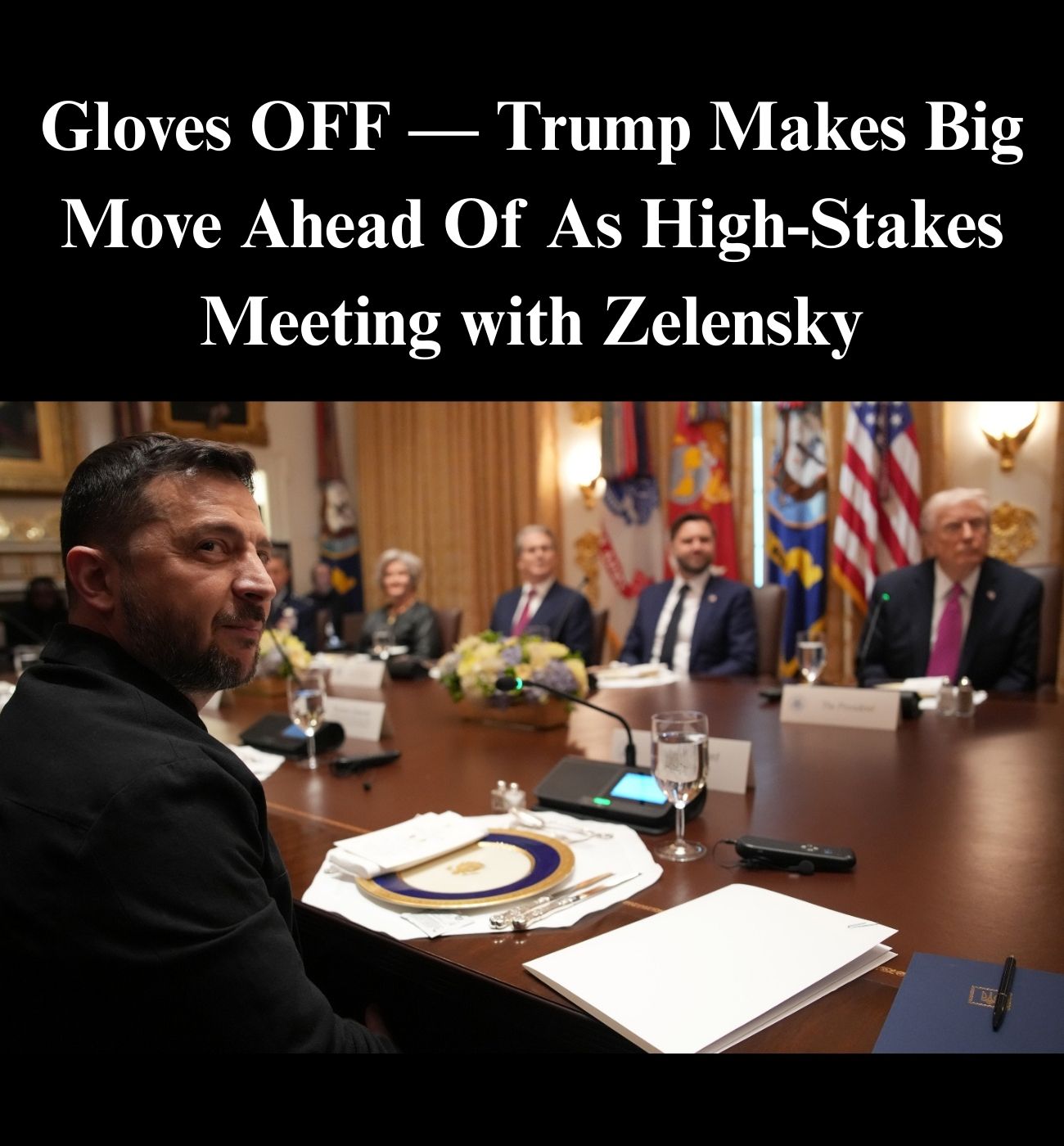
President Donald Trump is pushing back on Ukrainian President Volodymyr Zelenskyy’s newly unveiled 20-point peace proposal ahead of their scheduled Sunday meeting at Mar-a-Lago. “He doesn’t have anything until I approve it,” Trump said to Politico.
“We’ll see what he’s got,” Trump added, according to reports.
Despite the blunt assessment, Trump said he expects the meeting with Zelenskyy to be productive and expressed confidence that talks with Russian President Vladimir Putin would also move forward.
“I think it’s going to go good with him,” Trump told Politico. “I think it’s going to go good with Putin.”
The president said he is prepared to meet with Putin “as much I want,” signaling continued direct engagement with Moscow.
Zelenskyy’s latest proposal includes a 20 point framework that would freeze the war along current front lines while allowing Ukraine to pull back troops from the east, where demilitarized buffer zones could be established.
Details of the plan were revealed by Zelenskyy earlier this week.
The proposal would also address the management of the Zaporizhzhia nuclear power plant and territorial control of Donbas, the eastern region claimed by Moscow, according to Zelenskyy.
The Ukrainian president said his plan additionally calls for Russia to withdraw its forces from a specific area of Donetsk.
Zelenskyy recently met with Trump special envoy Steve Witkoff and Trump’s son in law Jared Kushner, describing the meeting as a “good conversation.”
A senior U.S. official told Axios the discussions were “positive and constructive,” claiming the administration has made more progress in the past two weeks than was achieved during the previous year of stalled diplomacy.
Russia has signaled opposition to Zelenskyy’s proposal ahead of the Florida talks.
On Friday, Moscow accused Zelenskyy and his European Union allies of attempting to undermine a U.S. brokered plan to halt the fighting.
The Kremlin said foreign policy aide Yuri Ushakov held telephone talks with U.S. officials as Deputy Foreign Minister Sergei Ryabkov publicly criticized Zelenskyy’s position.
“Our ability to make the final push and reach an agreement will depend on our own work and the political will of the other party, especially in a context where Kyiv and its sponsors, notably within the European Union, who are not in favor of an agreement, have stepped up efforts to torpedo it,” Ryabkov said on Russian television.
Ryabkov said the proposal drafted with Zelenskyy’s involvement “differs radically” from points previously outlined by U.S. and Russian officials earlier this month.
“Without an adequate resolution of the problems at the origin of this crisis, it will be quite simply impossible to reach a definitive accord,” he added.
Ryabkov said any final deal must remain within the parameters established by Trump and Putin during their meeting in Alaska in August or “no accord can be reached.”
In November it was reported that Ukraine had agreed to the U.S. peace proposal with only “minor details” remaining to be resolved, a U.S. official told CBS News. Rustem Umerov, a senior Ukrainian national security official, appeared to confirm the development, writing on X that Kyiv had reached an understanding on the “core terms” of the American plan during recent discussions in Geneva.
Zelensky was expected to travel to the White House later that month to finalize the agreement.
Separately, the United States and Russia held undisclosed talks in Abu Dhabi, according to reports from Reuters and the Financial Times, as the Trump administration worked to sustain momentum behind its evolving peace initiative, Newsweek reported.
The original 28-point U.S. proposal, which Russia viewed favorably, was “refined” following U.S.–Ukraine talks in Geneva to address concerns from Kyiv that the initial draft tilted too far toward Moscow and crossed several of Ukraine’s red lines. The most recent version of the plan under negotiation contains 19 points.