
This article may contain commentary
which reflects the author’s opinion.
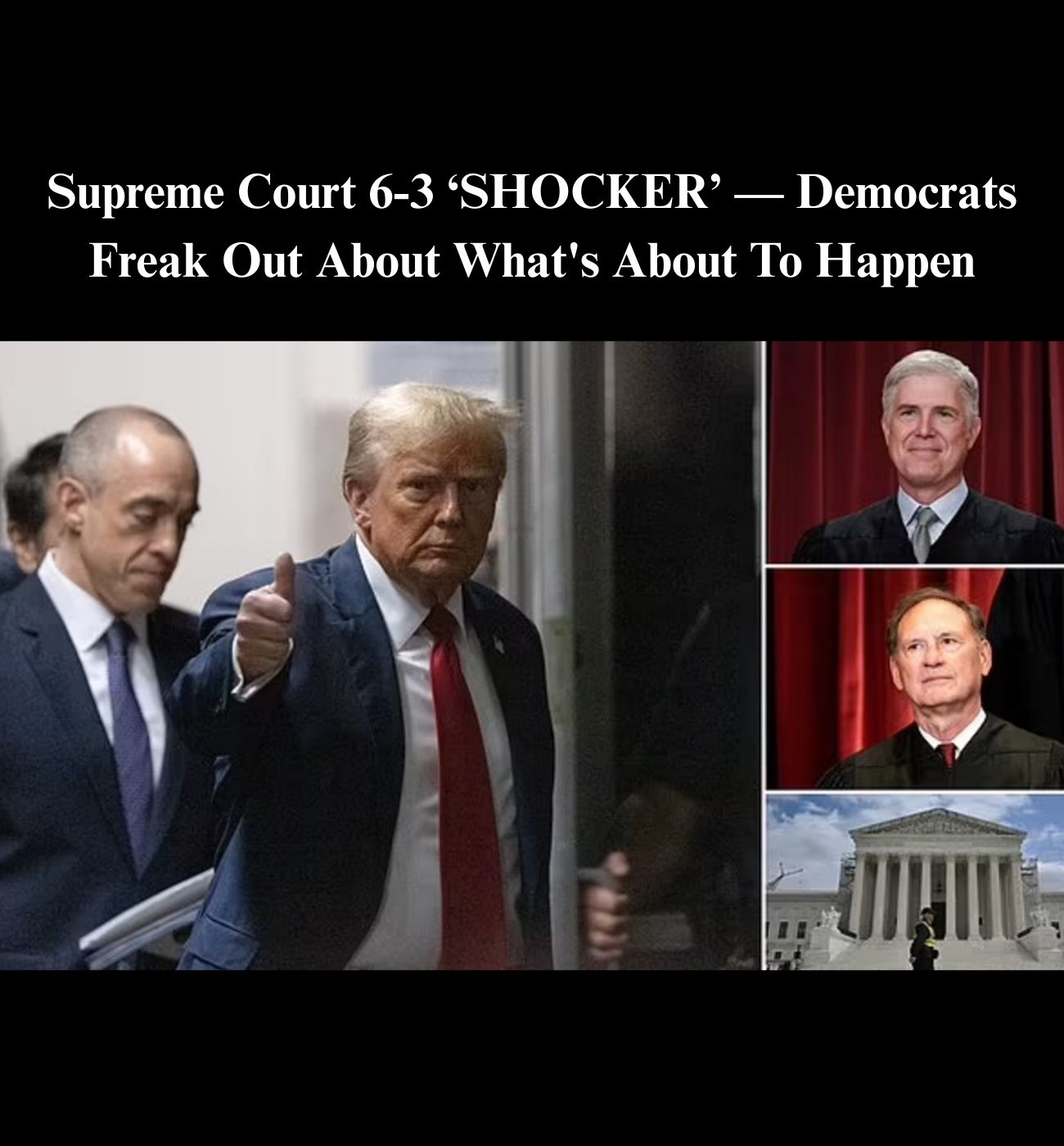
Justice Samuel Alito issued a pointed dissent on Tuesday following the Supreme Court’s 6-3 decision to temporarily prevent President Donald Trump from deploying the National Guard in Chicago.
Alito stated that the majority of the high court made “unwise” and “imprudent” decisions to arrive at its conclusion. He stated that the majority also failed to show sufficient deference to Trump after the president discovered that agitators were obstructing immigration officers and other federal personnel from performing their duties in Chicago, and that the National Guard needed to intervene to assist.
“Whatever one may think about the current administration’s enforcement of the immigration laws or the way ICE has conducted its operations, the protection of federal officers from potentially lethal attacks should not be thwarted,” Alito wrote.
The lawsuit originated from Trump’s invocation of a seldom-used federal law to federalize approximately 300 National Guard members and deploy them to safeguard federal personnel and facilities.
The Trump administration contended that protesters were obstructing, assaulting, and threatening ICE officers, and that the deployment of the National Guard was necessary because Illinois’s resistant Democratic leaders and local law enforcement were not sufficiently addressing the issue.
Illinois filed a lawsuit, and the lower courts prevented the deployment of the National Guard, determining that Trump had not met the legal requirements stipulating that the president could only employ reserved forces when he was “unable with the regular forces to execute the laws of the United States.” The Supreme Court’s ruling affirmed that determination as the case advances through the judicial process.
The majority of the Supreme Court stated in an unsigned order that “regular forces” refers to the U.S. military, not ICE or other civilian law enforcement agencies. The majority stated that, because Trump had not provided any justification for deploying the regular military for domestic purposes in Chicago, it was not possible to consider that option before utilizing the National Guard.
Alito, joined by Justice Clarence Thomas, dissented, asserting that the majority prematurely introduced and accepted an “eleventh-hour argument” regarding the interpretation of “regular forces.” Justice Neil Gorsuch issued a separate dissenting opinion.
The majority also expressed concerns about the statute’s language regarding the execution of laws, stating that if National Guard soldiers were only safeguarding federal officers, then such actions would not qualify as the execution of laws.
And, if the National Guard were to enforce laws, this could constitute a violation of the Posse Comitatus Act, which generally prohibits the military from acting as a domestic police force unless explicitly authorized by Congress, the majority stated.
Alito, an appointee of President George W. Bush, expressed that he found it “puzzling” that the majority considered the Posse Comitatus Act to be so pertinent, stating that the president could utilize the military for a “range of domestic purposes.” The Constitution authorizes the president to employ the military in response to war, insurrection, or other grave emergencies, Alito stated.
The conservative justice also cautioned against the wider ramifications of the majority’s ruling, noting that Trump has sought to deploy the National Guard in other cities as part of efforts to intensify immigration enforcement and address street crime. The president has also encountered legal opposition in California and Portland, Oregon, although the Chicago case was the most advanced within the judicial system.
Alito stated that demanding Trump exhaust all other military options before deploying the National Guard would result in “outlandish outcomes.”
“Under the Court’s interpretation, National Guard members could arrest and process aliens who are subject to deportation, but they would lack statutory authorization to perform purely protective functions,” Alito wrote. “Our country has traditionally been wary of using soldiers as domestic police, but it has been comfortable with their use for purely protective purposes.”
Illinois contended that ICE protests were predominantly peaceful and that local law enforcement had effectively managed the unrest.
State attorneys contended that the state would incur irreversible harm if the courts failed to prevent Trump from deploying the National Guard.
“The planned deployment would infringe on Illinois’s sovereign interests in regulating and overseeing its own law enforcement activities,” the attorneys wrote.
The attorneys added that Illinois’ “sovereign right to commit its law enforcement resources where it sees fit is the type of ‘intangible and unquantifiable interest’ that courts recognize as irreparable.”