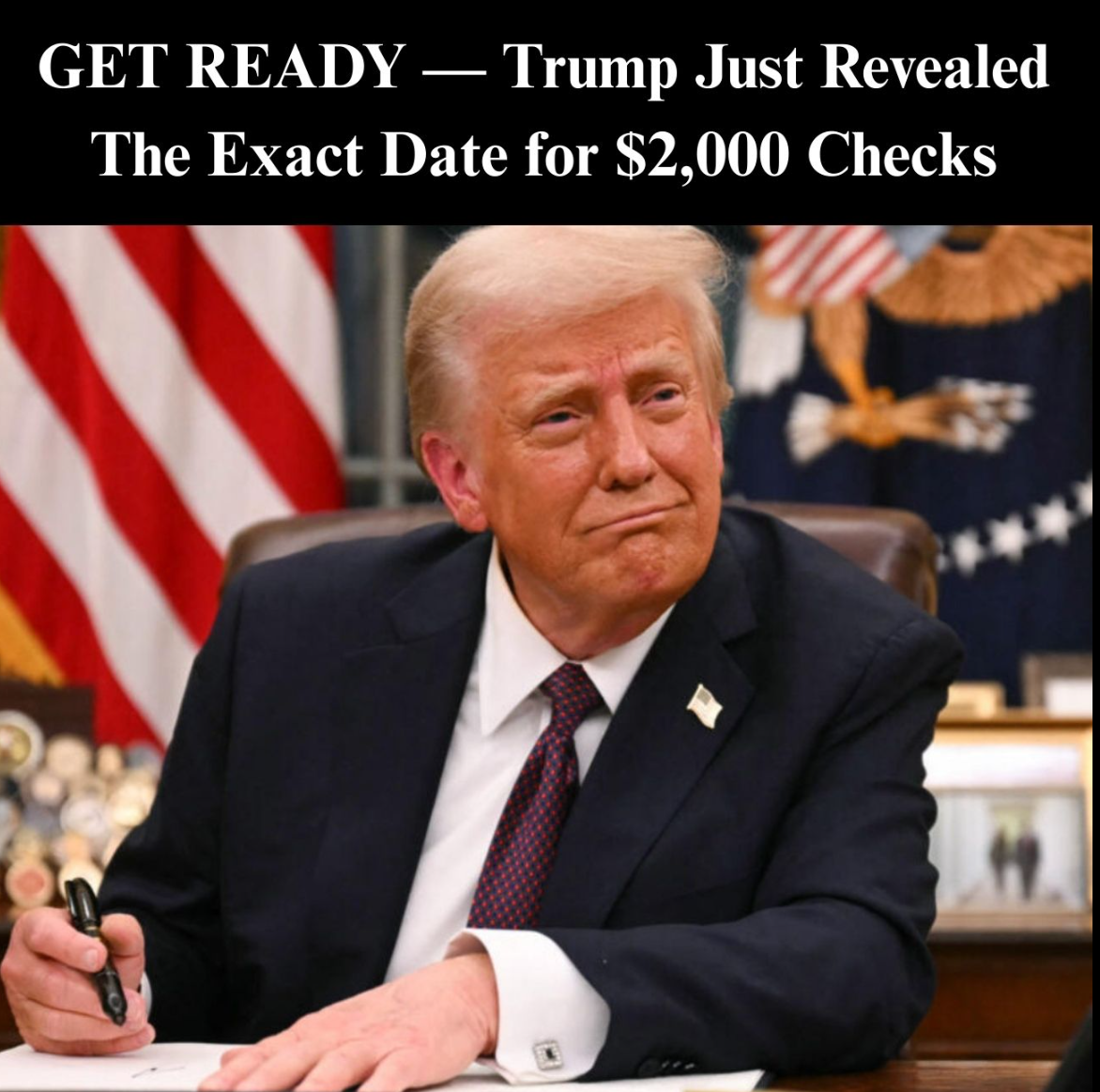

As President Donald Trump announces that members of the U.S. military will receive what he described as a “Warrior Dividend,” questions remain about whether the broader public will receive a proposed $2,000 tariff dividend. Trump first raised the idea of a tariff-funded payment in a post on his Truth Social account in November.
He said then that the dividend would be distributed to “everyone” except high-income earners. Several days later, on Nov. 12, Treasury Secretary Scott Bessent said the payments would be limited to families earning $100,000 or less.
Since then, Trump has reiterated that the $2,000 payments are still planned, saying they would likely be distributed to eligible Americans “probably in the middle of next year.”
“We’re going to be issuing dividends later on, some somewhere prior to, probably in the middle of next year, a little bit later than that. Thousands of dollars for individuals of moderate income, middle income,” Trump said on Nov. 17, as reported by Axios.
“Any form of stimulus payment issued by the U.S. government would have to be approved by Congress,” the El Paso Times reported. “Treasury Secretary Scott Bessent said on Nov. 12 that Trump is considering stimulus checks for families earning $100,000 or less.”
Trump announced during a nationwide address ahead of the Christmas holiday that his administration would be paying out a one-time bonus of $1,776 to U.S. military personnel to signify the year the Continental Congress declared America’s independence from Great Britain. The bonuses come months before the nation’s 250th birthday: July 4, 2026.
During his address, Trump implied that the bonuses had been planned for some time but had been kept under wraps.
“Along with the just passed one Big Beautiful bill, tonight, I am also proud to announce that more than 1450 thousand — think of this: 1,450,000 military service members will receive a special — we call it warrior dividend, before Christmas, a warrior dividend,” Trump said.
“In honor of our nation’s founding in 1776, we are sending every soldier $1776. Think of that. And the checks are already on the way. Nobody understood that one until about 30 minutes ago,” he added.
The Senate sent a significant defense package to Trump, completing one of the last major legislative tasks for the year. Lawmakers came together to pass the National Defense Authorization Act (NDAA), a comprehensive $901 billion bill packed with defense policies that allocate funding for several of the Trump administration’s national defense priorities.
The measure received strong bipartisan support, passing the upper chamber with a vote of 77-20. This legislative exercise is an annual routine for Congress, typically wrapping up the year without much controversy.
This year, NDAA encountered some rough waters in the House that put its passage at risk. While the Senate proceedings were less contentious, there were still unresolved issues regarding certain provisions that caused concern among lawmakers.
Bipartisan frustration arose over a provision that aimed to relax some safety standards in the airspace over Washington, D.C. This comes after a tragic incident earlier this year when a collision between a Black Hawk helicopter and a passenger jet near Ronald Reagan Washington National Airport resulted in the loss of 67 lives.
Senate Commerce Committee Chair Ted Cruz, a Texas Republican, proposed an amendment to remove this controversial provision. Instead, he sought to include his ROTOR Act, which would require the implementation of technology in aircraft to enhance awareness of air traffic, Fox News reported.
Amending the package would have required it to return to the House. Instead, Cruz plans to attach his legislation to future spending bills.
“I’m seeking a vote on the ROTOR Act as part of any appropriations measure before the current continuing resolution expires at the end of next month,” Cruz said.