News Commentary
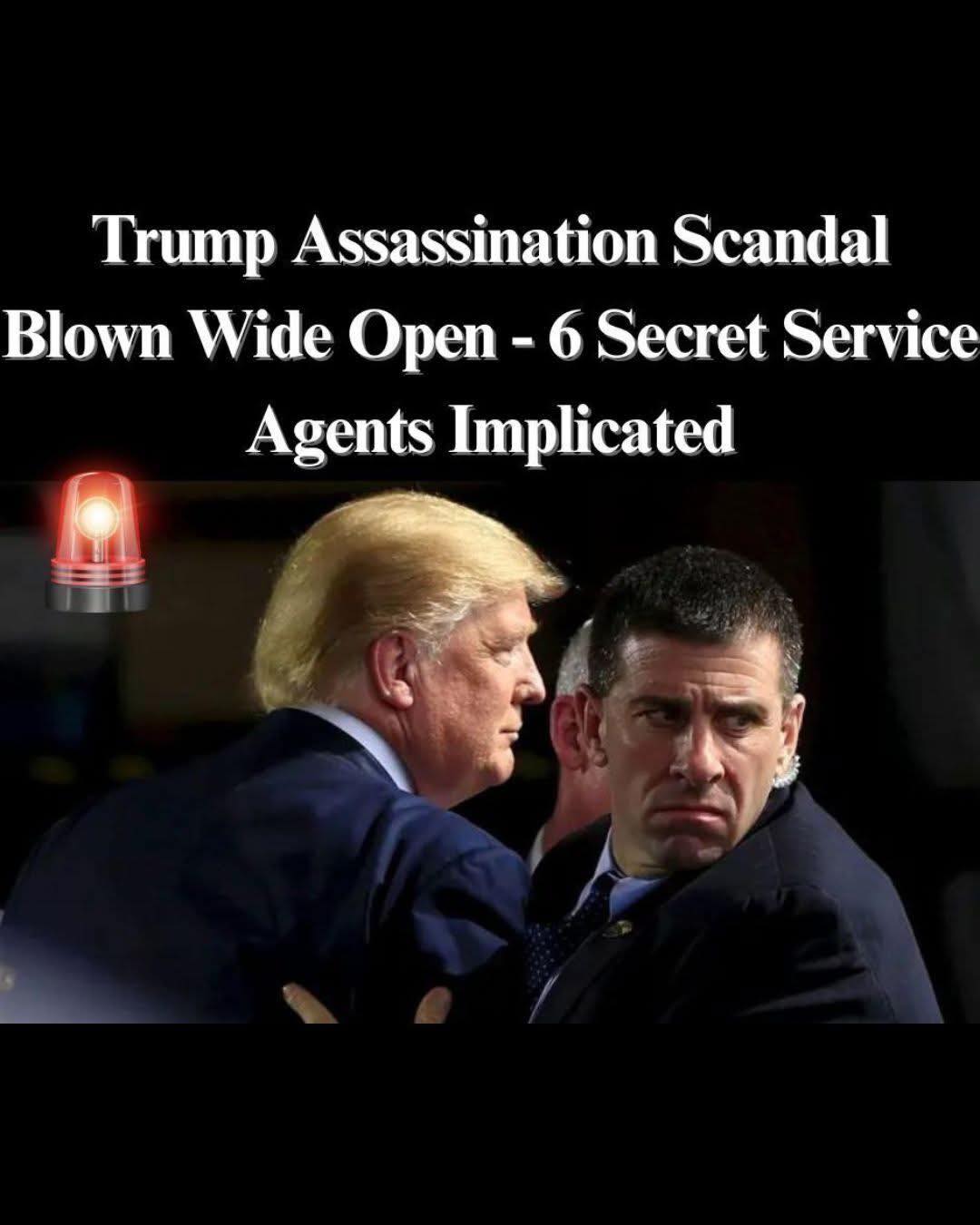
The U.S. Secret Service has quietly suspended six agents without pay or benefits following the attempted assassination of President Donald Trump at a campaign rally in Butler, Pennsylvania, in July 2024 — a security failure now officially acknowledged by the agency as “preventable.”
The disciplinary action was confirmed this week by United States Secret Service Deputy Director Matt Quinn, who told CBS News that the agency chose not to simply fire personnel, but instead focus on systemic failures that led to the breach.
“We weren’t going to fire our way out of this,” Quinn said. “Butler was an operational failure, and we are laser focused on fixing the root cause of the problem.”
Suspensions Without Pay, Reduced Roles
According to Quinn, the six agents received suspensions ranging from 10 to 42 days without pay or benefits. Upon returning, they were reassigned to restricted duties with reduced operational responsibilities. The penalties followed a federally mandated disciplinary process.
The actions stem from the July 13, 2024 rally, where Thomas Matthew Crooks, positioned outside the secured perimeter, managed to fire multiple rounds toward the stage.
A Preventable Tragedy
The attack claimed the life of Corey Comperatore, a 50-year-old firefighter, husband, and father who was attending the rally. Trump was grazed by a bullet, and two additional attendees were seriously wounded. Crooks was later killed by a Secret Service sniper.
The incident sent shockwaves through the political and law enforcement communities and raised immediate questions about perimeter control, threat detection, and coordination with local police.
Those questions were later answered bluntly.
In December, a bipartisan House task force released a 180-page report concluding that the Butler attack was entirely preventable, citing longstanding leadership failures, training gaps, and breakdowns in communication that “created an environment” ripe for catastrophe.
Leadership Fallout and Reforms
The Butler failure was not an isolated incident. Just weeks later, a second assassination attempt against Trump occurred in West Palm Beach, Florida, further compounding scrutiny on the Secret Service. While that attempt was thwarted, the cumulative failures proved too much for then-Director Kimberly Cheatle, who resigned shortly thereafter.
Since then, the agency has undergone internal restructuring and technological upgrades. Quinn confirmed that the Secret Service has deployed:
- Military-grade surveillance drones
- Mobile command posts
- Enhanced radio and interagency communication systems
The goal, Quinn said, is to eliminate the operational blind spots that allowed Crooks to exploit the security perimeter in Butler.
Accountability, at Last
For months, critics accused the Secret Service of stonewalling Congress and shielding leadership from consequences. The suspensions — though limited — mark the first tangible disciplinary action tied directly to Trump’s near-assassination.
Still, questions remain.
Why were vulnerabilities identified only after blood was spilled? Why did it take congressional pressure and multiple assassination attempts to trigger reforms? And are suspensions enough when a sitting president came within inches of being killed?
As investigations continue, the Butler rally stands as one of the most consequential security failures in modern American political history — a stark reminder that institutional complacency can carry deadly consequences.
Whether the Secret Service’s promised reforms will restore public trust remains an open question. But the message from Butler is unmistakable: failure is no longer abstract when the target is the presidency itself.