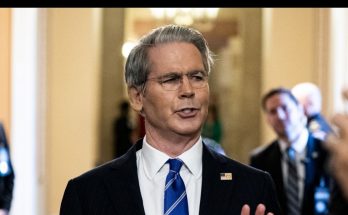
Minnesota Court of Appeals Judge Renee Lee Worke was arrested over the weekend on suspicion of driving under the influence of alcohol, according to law enforcement sources and local watchdog reports.
Crime Watch Minneapolis first reported that Judge Worke was taken into custody in Steele County and released after about four hours in a holding facility. Authorities said the arrest was based on probable cause for Driving While Intoxicated (DWI), but no formal charges had been filed as of Monday.
Few details about the arrest were immediately available, and the Minnesota Judicial Branch did not respond to requests for comment.
Worke, who has served on the state’s Court of Appeals since 2005, was reportedly released pending further investigation.
Worke is the latest in a growing number of state judges across the country arrested in recent months for suspected drunk driving, raising renewed questions about judicial conduct and accountability.
Just last month, Iowa Chief Judge Adria Kester of the state’s Second Judicial District was charged with operating while intoxicated (OWI) after police said she passed out behind the wheel and veered into oncoming traffic on U.S. Highway 30 near Boone. Witnesses reportedly found Kester “slumped over the steering wheel” before climbing into her truck through the back window to put it in park.
According to police, Kester was “unsteady and could not walk on her own” and refused field sobriety tests. She has pleaded not guilty and is due in court next month. The Iowa Supreme Court reassigned her case to a judge from another district to avoid conflicts of interest.
In September, Georgia Superior Court Judge Robert Guy Jr., 48, was arrested for drunk driving after he allegedly backed his Mercedes into a truck in the parking lot of a Jacksonville strip club and tried to offer the vehicle’s owner $500 to avoid exchanging insurance information. Police said Guy was “slurring his words” and “too intoxicated to drive.” He was booked and later released pending trial.
Judge Worke, 67, has had a long tenure on Minnesota’s appellate bench and has previously faced public scrutiny for controversial rulings. In May 2024, she overturned a jury’s second-degree murder conviction in the high-profile case of Cody Fohrenkam, who had been found guilty of fatally shooting 15-year-old Deshaun Hill, a student-athlete from Minneapolis.
The jury in that case had deliberated less than an hour before finding Fohrenkam guilty, but Worke ruled that a new trial was required after determining that incriminating statements made by the defendant were obtained unlawfully.
“[T]he state has failed to satisfy its burden of showing that Fohrenkam’s continued detention was lawful,” Worke wrote in her decision, adding that his statements “must be suppressed as the product of an unlawful seizure.”
The ruling sparked backlash from the Hennepin County Attorney’s Office, which said in a statement that it was “deeply disappointed in this decision” and was reviewing options to pursue justice. The victim’s family also met with prosecutors to discuss whether to appeal or retry the case.
Worke’s latest legal troubles could complicate her standing on the bench if formal DWI charges are filed. The Minnesota Board on Judicial Standards, which oversees judicial discipline, has not commented on whether an inquiry has been opened.
Worke, a graduate of Hamline University School of Law, was appointed to the appeals court by then-Gov. Tim Pawlenty and previously served as a district court judge in Freeborn County. Her professional record includes a focus on criminal and civil procedure, and she has taught judicial education programs for state bar associations.
Neither the Steele County Sheriff’s Office nor the Minnesota State Patrol has released the arrest report or details about Worke’s blood-alcohol content.
The arrest adds to a series of recent incidents involving judges accused of driving under the influence — a pattern that has drawn national attention to judicial ethics enforcement. In some states, oversight commissions have moved to tighten policies requiring mandatory reporting of arrests or convictions for alcohol-related offenses by sitting judges.