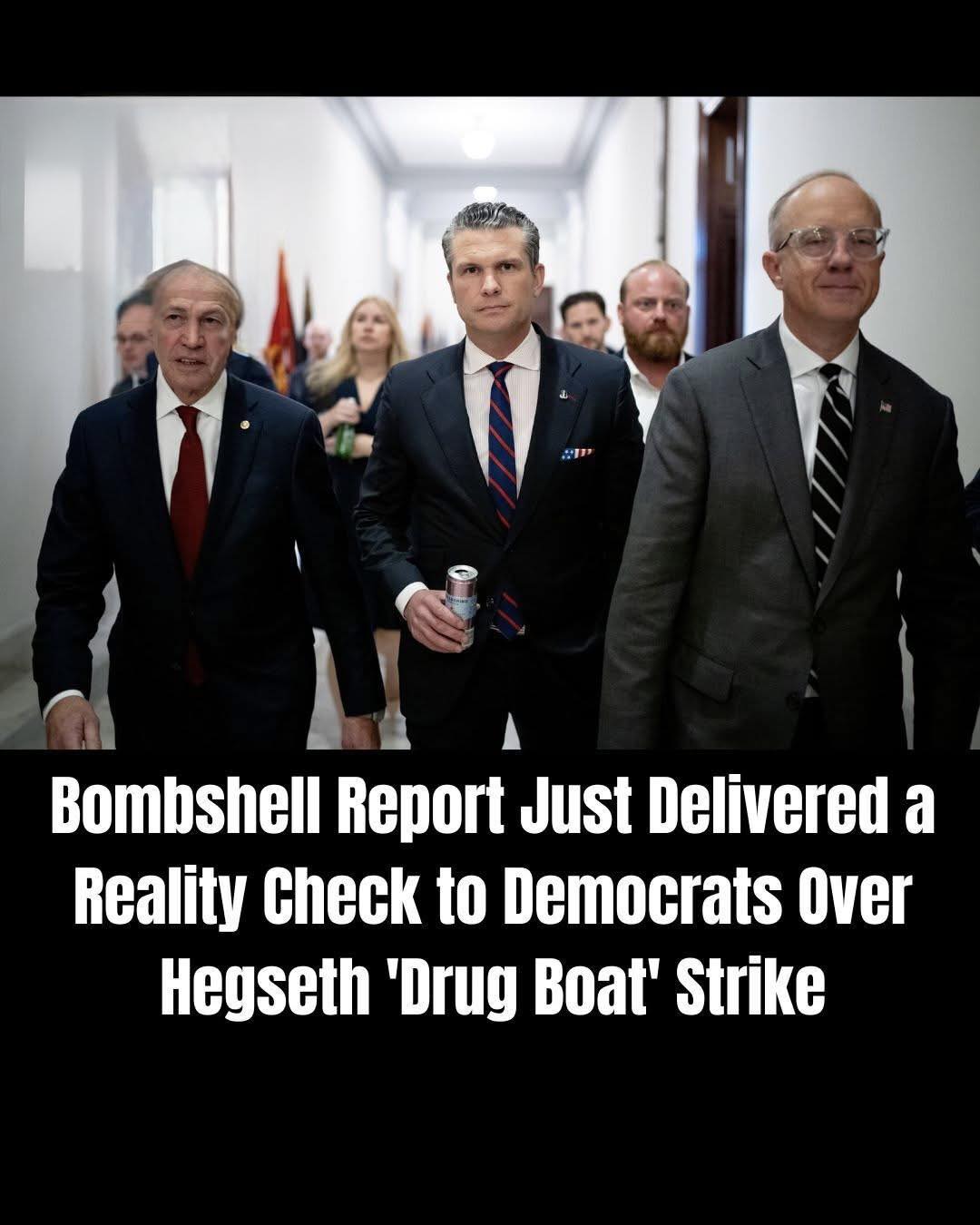
A new and highly charged political storyline erupted this week after a sudden wave of reports claimed that a “second strike” was launched against survivors of a narcoterrorist boat destroyed during a U.S. military operation in early September. According to these reports, two individuals who survived the initial attack were allegedly targeted again — and the order for this supposed follow-up strike was attributed to Secretary of War Pete Hegseth.
But within hours of the initial reporting, the narrative began to unravel. Officials pushed back, details didn’t line up, and now new reporting from separate outlets — including the New York Times — is providing information that sharply contradicts the claims and casts serious doubt on the story’s core allegations.
The controversy began when The Washington Post, citing unnamed sources, reported that the Special Operations commander on the ground ordered a second strike in order to comply with what they described as direct instructions from Hegseth. The Post suggested that two survivors clinging to wreckage were intentionally targeted as part of a broader directive handed down from the top of the chain of command.
The claim immediately drew attention from political commentators, critics of the administration, and foreign media outlets, which quickly amplified the allegations. Social media erupted with accusations ranging from unlawful conduct to potential war crimes — all based on assertions from anonymous individuals.
Immediate Pushback from Officials
However, the reaction from inside the administration was swift. Hegseth called the reporting “completely fabricated,” rejecting the claim that he ordered any second strike or played any role in decisions made after the initial engagement. The White House Press Secretary also publicly disputed the narrative, stating that Hegseth issued only the authorization for the first strike — the one that was already fully confirmed and publicly acknowledged by the administration.
According to the Press Secretary, Hegseth’s involvement ended after the initial green light, and there were no instructions — written, verbal, direct, or indirect — ordering a follow-up attack.
Military officials who spoke on background echoed the same message: the only authorized strike was the opening action targeting a suspected narcotrafficking vessel involved in a broader anti-drug operation in the Western Hemisphere.
The administration has repeatedly emphasized that the first strike was legal, justified, and part of a larger strategy to dismantle transnational criminal networks responsible for violence, destabilization, and massive volumes of illicit drugs flowing into the United States.
New Reporting Undermines the Claims
In a development that further complicated the media narrative, the New York Times published its own report offering key details that directly contradict the central allegation made by the Washington Post. According to the Times, officials familiar with the operational timeline stated that while Hegseth indeed authorized the initial strike, he did not issue — nor was he even consulted about — any second strike.
The Times’ reporting noted that the chaos of real-time military operations, combined with the fog of war and the fragmented nature of early intelligence reports, may have contributed to the confusion. Some officials suggested that what the Post interpreted as a second strike order might have actually been a miscommunication or an internal discussion within the field command, not an instruction from Washington.
Others argued that there may never have been a second strike at all, and that early reports were mischaracterized due to gaps in situation updates relayed between agencies.
A Story Built on Sand?
The unraveling of the narrative has led to broader questions about how the initial story took hold so quickly, why anonymous sources were presented as authoritative without corroboration, and how such significant claims reached publication without transparent verification.
Critics of the early reporting noted that key questions — such as who exactly witnessed the alleged order, how it was communicated, and whether any physical evidence supported the claim — were never addressed. The reliance on unnamed sources has been a persistent issue in high-profile political reporting, and the current controversy has revived debate over how media outlets handle allegations involving national security operations.
The use of anonymous sources is common in journalism, particularly in cases involving sensitive military or intelligence information. However, when the claims involve accusations of illegality or wrongdoing, many argue that more robust verification should be required before publication.
The Operation: What Is Confirmed
While the supposed “second strike” remains in dispute, the first strike is not. The September 2 operation was part of a larger initiative aimed at dismantling maritime drug-trafficking activities run by criminal networks operating across Latin America and the Caribbean.
Officials say the boat targeted in the initial strike was believed to be transporting narcotics, weapons, or both — and was linked to violent organizations responsible for destabilizing entire regions. The strike was described as a precision military action coordinated with multiple agencies to reduce threats to U.S. citizens and allies.
Surveillance, intelligence gathering, and coordination with law enforcement partners were all part of the lead-up to the operation. According to military officials, the boat was engaged only after surveillance confirmed illicit activity and after it refused multiple warnings to stop.
The administration has billed the larger initiative as essential to combating cartel operations, reducing drug inflows, and protecting communities affected by narcotics-related violence.
Political Reaction and Media Backlash
Reactions across the political spectrum have varied. Some critics of the administration seized on the initial Washington Post report to accuse officials of misconduct. However, as more reporting emerged casting doubt on the allegations, the tenor of the coverage shifted.
Commentators have begun questioning whether the original narrative was rushed to publication without sufficient scrutiny. Others have called the situation an example of how misinformation or premature reporting can fuel unnecessary political conflict.
There is also the broader question of trust: when media outlets publish explosive allegations based on unverified claims, the fallout can shape perceptions long after the story has been corrected or contradicted. The current controversy may reignite discussions about journalistic standards, accountability, and the responsibility of large news organizations to avoid contributing to confusion during moments of national security tension.
What Comes Next
At this stage, the growing consensus — even among media outlets — is that there is no verified evidence of a second strike authorized by Hegseth or any top-level official.
Investigations may continue internally, but officials insist that all available information supports the administration’s version of events: a single, authorized strike, followed by situational assessments on the ground.
In the meantime, the episode serves as yet another reminder of the challenges inherent in reporting on military operations where details emerge slowly, narratives shift rapidly, and the pressure to publish quickly often competes with the need to verify information thoroughly.
As the dust settles, one thing is clear: the dramatic narrative about a second strike on survivors is no longer holding up under scrutiny — and may ultimately be remembered as yet another media story that fell apart once the full facts began to surface.