In a striking snapshot of America’s polarized political landscape, a recent NBC News poll has unveiled that 43% of Americans identify as supporters of the ‘No Kings’ protest movement, significantly outpacing the 30% who align with the MAGA movement.
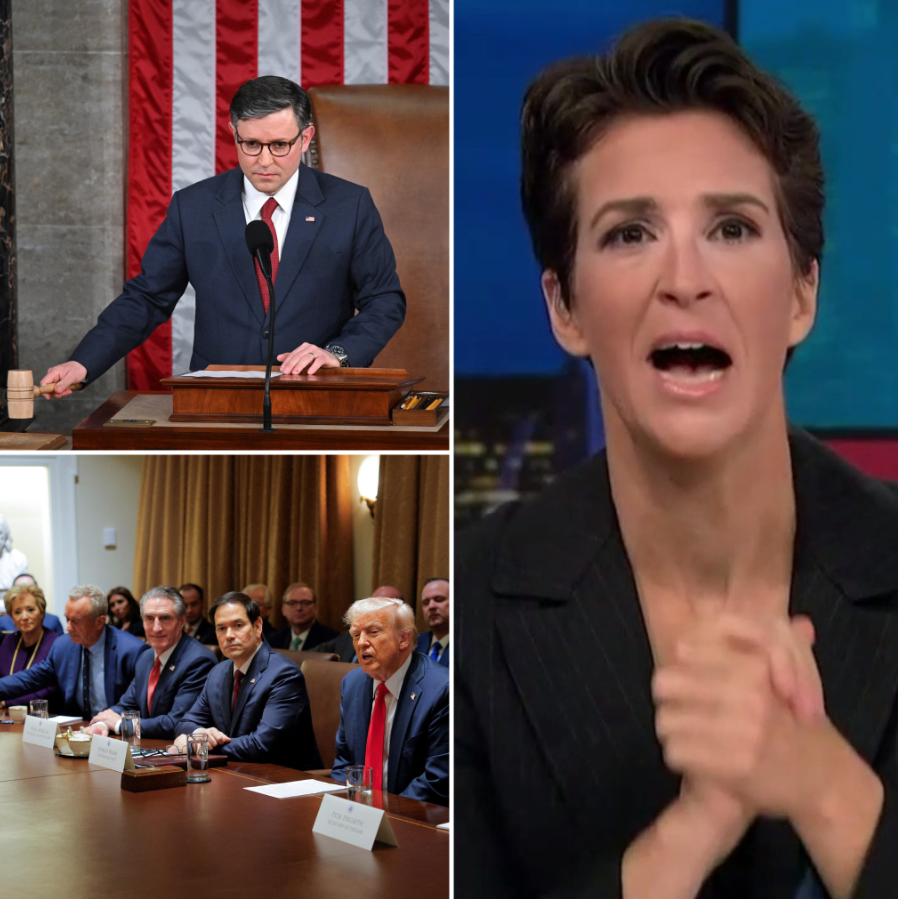
This revelation, highlighted in a segment on The Rachel Maddow Show, underscores a growing backlash against perceived abuses of power in Donald Trump’s second term.
As the nation grapples with democratic challenges, the poll raises questions about the sustainability of Trump’s influence and the potential for sustained civic resistance.
Rachel Maddow, known for her meticulous, narrative-driven analysis, delved into the poll with her signature depth, weaving data into a broader story of democratic resilience. Broadcasting from MSNBC studios in New York, she presented the findings with a measured tone, emphasizing factual contrasts without overt sensationalism.
Her delivery, often characterized by long-form explanations and historical parallels, framed the numbers as a testament to public discontent.
“43% of this country says they consider themselves to be a supporter of the ‘No Kings’ protest movement,” Maddow stated, highlighting how this support “absolutely dwarfs the base of support for MAGA in this country—but in absolute terms it also means…support for the ‘No Kings’ movement against Trump, it’s just huge.”
She used visual aids like poll graphics to underscore the disparity, her voice steady yet insistent, drawing viewers into the implications without exaggeration.

The ‘No Kings’ movement emerged in early 2025, shortly after Trump’s inauguration for his second term, as a response to what organizers describe as authoritarian policies and corruption.
Organized by a coalition including Indivisible, the 50501 Movement, MoveOn, and the ACLU, it draws on the “3.5% rule” theorized by political scientist Erica Chenoweth, which posits that nonviolent movements achieving participation from 3.5% of the population can drive major change.
The protests began modestly but escalated, with the first major wave in June 2025 drawing over four million participants across more than 2,100 events nationwide.
By October 18, 2025, the movement swelled to over seven million people at 2,700 gatherings in all 50 states, marking one of the largest single-day protests in U.S. history.

Protesters, spanning urban centers like Washington, D.C., and rural towns, carried signs proclaiming “No Kings” and “The Law is King,” emphasizing a rejection of monarchical-style governance. In D.C., crowds gathered near the Capitol, waving American flags alongside banners invoking the Constitution’s preamble.
The events remained peaceful, focusing on themes of democracy, anti-corruption, and opposition to Trump’s power consolidations, such as executive overreach and alliances with billionaire influencers.
This nonviolent approach, inspired by historical figures like Dr. Martin Luther King Jr., aimed to reaffirm that power resides with the people, not unchecked leaders.
Republicans, however, mounted a fierce counteroffensive. Ahead of the October protests, party leaders labeled the rallies “Hate America Rallies” and accused participants of being violent communists. House Speaker Mike Johnson took a prominent role, claiming communists secretly orchestrated the events.
Trump himself dismissed the protests as “ridiculous,” branding attendees as “lowlifes” unrepresentative of the country. Despite these smears, the poll indicates the strategy backfired, with ‘No Kings’ support encompassing not just Democrats but also about 40% of independents.

Maddow’s segment amplified this failure, noting how MAGA support has dipped from 36% in March 2025 to 30% now. She contrasted the movements’ scopes, using archival footage of past protests to illustrate shifting public sentiment.
Her analytical style—pausing for emphasis, citing sources meticulously—lent credibility, avoiding the satirical flair of shows like The Late Show with Stephen Colbert while maintaining engagement through storytelling.

The poll’s timing, near the end of Trump’s first year back in office, highlights broader societal tensions. Trump’s administration has faced criticism for policies seen as eroding democratic norms, including efforts to centralize power and suppress dissent.
In Minnesota, recent escalations involving federal responses to local unrest have further fueled the movement. Chenoweth’s involvement, through discussions on nonviolent resistance, has provided intellectual ballast, with her appearing in media to explain how sustained participation could tip the scales.
As ‘No Kings’ garners unprecedented backing, it poses a challenge to the status quo. Will this surge translate into electoral shifts or policy changes? Or will it deepen divides, prompting more aggressive countermeasures?
The movement’s growth suggests a resilient undercurrent in American democracy, but its ultimate impact remains an open question in these turbulent times.